

2026 Top Hiking Boots for Global Buyers
Choosing the right Hiking Boots in 2026 requires more than comparing prices or attractive product photos. Global buyers face different trails, climates, foot shapes, and import conditions. A waterproof boot suited to wet Scottish hills may feel too warm in Southeast Asia. Lightweight shoes can perform well on dry paths, yet struggle on sharp volcanic rock. Small details matter.
This guide examines the 2026 top hiking boots through practical performance, not marketing claims alone. We consider grip, ankle support, cushioning, breathability, durability, weight, and repairability. Testing should include loose gravel, muddy slopes, long descents, and several hours of continuous walking. Wet socks reveal weaknesses quickly. So does poor heel stability.
Reliable recommendations also require transparent evidence. Manufacturer specifications are useful, but independent reviews and field experience provide essential context. No boot fits every traveler perfectly. Even respected models may cause pressure points after twenty kilometers. That is worth admitting. Personal foot shape, sock thickness, pack weight, and local weather can change the final choice. Buyers should check sizing charts carefully and confirm return policies before ordering internationally.
The selections ahead are designed for different budgets and journeys, from weekend forest walks to demanding mountain routes. They also consider value beyond the initial purchase price. A slightly heavier boot may last several seasons, while an ultralight model may need earlier replacement. The best choice is not always the most expensive. It is the boot that remains secure, comfortable, and dependable when conditions become unpleasant.
Hiking Boot Categories and Their Best Uses in 2026
2026 Top Hiking Boots for Global Buyers
Hiking boot categories should match terrain, load, climate, and walking habits. The Outdoor Foundation’s 2024 report recorded 57.8 million U.S. hiking participants in its latest comparable data. That figure matters, but it does not represent every global buyer.
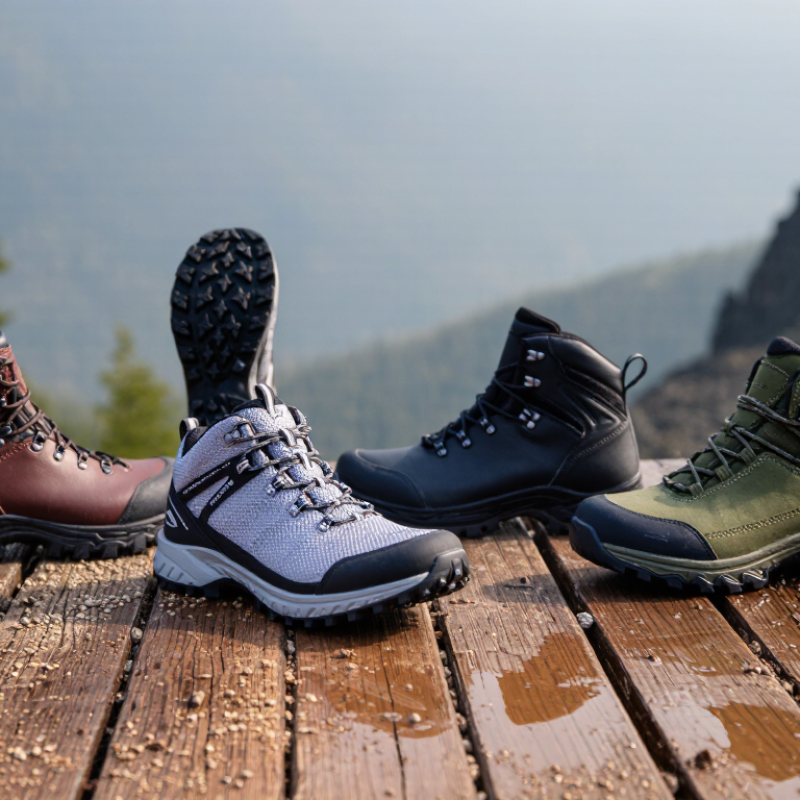
Light trail shoes suit maintained paths, warm climates, and fast day hikes. They usually feel flexible and reduce fatigue. However, thin uppers may fail against sharp rocks or heavy rain. Mid-cut boots offer better ankle coverage and stability on uneven trails. They fit mixed terrain, moderate backpacks, and changeable weather. Look for a firm heel counter, deep lugs, and a protected toe.
Choose backpacking boots for heavy loads, loose ground, and multi-day routes. Their stiffer midsoles support tired feet, but they require patient break-in time. Insulated winter boots belong on snow and frozen trails. Check warmth ratings, waterproof construction, and crampon compatibility before purchase. Marketing language can sound impressive. Test the details.
My own fitting mistake was buying a stiff boot for short, dry trails. The boot protected well, yet it felt unnecessarily heavy. The 2025 Global Outdoor Footwear Market analysis by Grand View Research highlights durability and waterproof performance as major buying factors. Those features still need context. Waterproof boots can feel hot in humid regions, while breathable mesh can leak during sudden storms. Measure both feet late in the day, wear hiking socks, and leave toe space for downhill movement.
2026 Top Hiking Boots for Global Buyers - Hiking Boot Categories and Their Best Uses in 2026
| Boot Category | Best Use | Recommended Terrain | Typical Waterproofing | Ankle Support | Typical Weight per Pair | Outsole and Traction | Suitable Climate | Main Advantages | Important Trade-Off |
|---|---|---|---|---|---|---|---|---|---|
| Lightweight Hiking Boots | Day hikes, weekend walks, and fast-moving trips with a light pack | Maintained trails, forest paths, rolling hills, and moderate rocky sections | Often available with water-resistant or waterproof membranes; non-membrane versions dry faster | Moderate | Approximately 700–1,100 g | Flexible rubber outsole with moderate lugs for mixed trail surfaces | Temperate, warm, and changeable conditions | Low fatigue, quick break-in, and good walking comfort | Less protection and durability than heavier boots on severe terrain |
| Mid-Cut Hiking Boots | General-purpose hiking, multi-day trail trips, and moderate backpacking | Uneven trails, loose gravel, forest routes, and moderate elevation gain | Commonly offered with waterproof membranes; leather or synthetic uppers affect water resistance | Moderate to High | Approximately 900–1,400 g | Multi-directional lugs designed for wet soil, rock, and compact dirt | Three-season use in temperate regions | Balanced protection, stability, comfort, and versatility | Heavier and warmer than trail shoes or low-cut footwear |
| Backpacking Boots | Long-distance trips carrying heavier loads and extended backcountry travel | Rugged trails, steep slopes, talus, mud, and remote routes | Waterproof construction is common, with gusseted tongues and treated uppers | High | Approximately 1,200–1,800 g | Firm, durable outsole with deep lugs and strong edging support | Cool, wet, and variable conditions | Excellent load stability, underfoot protection, and durability | Longer break-in period and greater weight |
| Mountaineering Boots | High-altitude trekking, alpine approaches, and technical mountain travel | Snow, ice, mixed rock, scree, and steep alpine terrain | Highly weather-resistant construction with insulated or rigid waterproof designs | Very High | Approximately 1,400–2,400 g | Rigid sole compatible with traction devices; aggressive lugs for steep terrain | Cold, snowy, windy, and high-altitude environments | Maximum protection, rigidity, warmth, and compatibility with crampons | Too stiff, heavy, and warm for ordinary lowland hiking |
| Winter Hiking Boots | Snowshoeing, cold-weather hiking, and daily walking in winter conditions | Snow-covered paths, icy trails, frozen ground, and packed winter routes | Waterproof outer materials with insulated linings and sealed construction | Moderate to High | Approximately 1,000–1,800 g | Cold-flexible rubber compound with deep lugs; traction devices may be added | Cold climates, snow, slush, and freezing temperatures | Warmth, weather protection, and improved grip in winter conditions | Reduced breathability and limited comfort in warm weather |
| Desert and Hot-Weather Hiking Boots | Hiking in deserts, dry plateaus, and hot regions with abrasive ground | Sand, dry rock, gravel, canyon paths, and hard-packed desert trails | Usually non-waterproof to maximize ventilation and drying speed | Moderate | Approximately 800–1,300 g | Durable rubber outsole with traction for rock and loose dry surfaces | Hot, dry, and dusty climates | Breathability, abrasion resistance, and reduced heat buildup | Limited protection against prolonged rain, snow, and standing water |
| Wet-Trail and Rain Hiking Boots | Rainy-season hiking, wet forests, and frequently muddy trails | Mud, wet roots, saturated soil, streams, and slippery woodland paths | Waterproof membrane, sealed seams, and water-resistant upper materials | Moderate to High | Approximately 900–1,500 g | Deep, widely spaced lugs designed to shed mud and improve wet-ground grip | Humid, rainy, and cool climates | Water protection, secure footing, and good trail stability | Can feel warm and may dry slowly after complete saturation |
| Approach and Scrambling Boots | Rocky approaches, scrambling, and routes requiring precise foot placement | Rock slabs, boulder fields, scree, narrow ledges, and technical trail sections | Ranges from water-resistant leather to waterproof membrane models | Moderate to High | Approximately 900–1,500 g | Sticky rubber, climbing-style toe zone, and precise edging area | Dry or moderately wet mountainous conditions | Excellent grip and control on rock with durable toe protection | Less comfortable for long flat-distance walking than flexible hiking boots |
| Eco-Conscious Hiking Boots | Buyers prioritizing recycled, bio-based, repairable, or lower-impact materials | Light to moderate trails, travel, and general outdoor use | Varies by model; water-repellent treatments and waterproof membranes are both used | Moderate | Approximately 800–1,500 g | Rubber or partially recycled compounds with trail-specific lug patterns | Depends on construction; many models target three-season use | Material transparency, repairability options, and reduced material impact | Sustainability claims and long-term durability should be verified individually |
| Travel and Hybrid Hiking Boots | Urban travel combined with sightseeing, light hiking, and everyday walking | City streets, parks, paved paths, and easy-to-moderate trails | Water-resistant finishes are common; fully waterproof versions are also available | Low to Moderate | Approximately 700–1,200 g | Moderate lugs suitable for pavement and compact trails | Variable climates and mixed travel conditions | Versatility, comfort, and easier packing for international travel | Not intended for heavy loads, deep mud, or highly technical terrain |
Typical specifications are category-level guidance for 2026 buyers. Actual performance varies by construction, fit, materials, outsole compound, climate, load, and trail conditions.