

10 Best Long Torso Swimsuits for Women in 2026
A swimsuit can look polished on a hanger and still pull uncomfortably at the shoulders. For women with longer torsos, the right fit often depends on more than a size label. Torso length, strap placement, leg opening, and fabric stretch all affect comfort. Watch for a suit that rides upward when you move or feels tight across the body. Small details matter.
The market is expanding, but that does not guarantee better fit. Grand View Research’s Swimwear Market Size, Share & Trends Analysis Report estimated the global swimwear market at USD 20.7 billion in 2023 and projected growth through 2030. That figure describes the overall market, not long-torso sizing or customer satisfaction. It offers context, not a fit test. Length alone is not the whole story.
This guide to 10 Best Long Torso Swimsuits for Women in 2026 focuses on practical signs shoppers can assess: adjustable straps, torso-length options, supportive lining, and comfortable movement. Check each brand’s size chart, since “long torso” can mean different things across labels. If possible, try sitting, reaching, and walking in the suit before deciding. Fit is personal. A swimsuit that works in a changing room may feel different after an hour by the water. That is worth remembering.
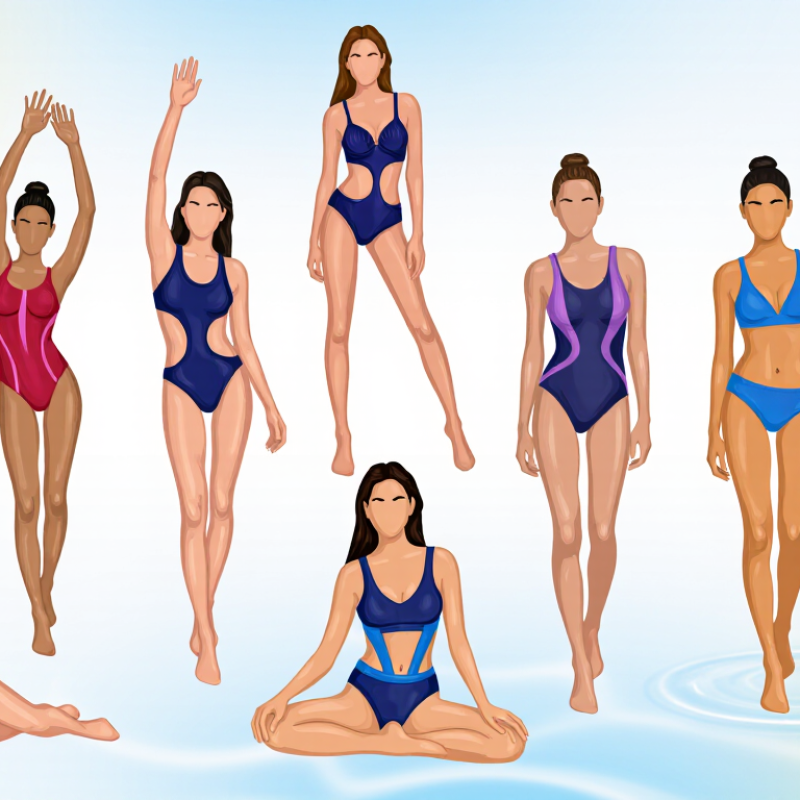
Define Long-Torso Fit Using ASTM D5585 Women’s Body-Measurement Tables
ASTM D5585 provides body-measurement tables for adult women’s misses sizes 00 through 20. It lists dimensions such as bust, waist, hip, and back waist length. These measurements help compare body proportions with a swimsuit’s size chart. But the standard does not define a “long torso” category or guarantee a particular suit will fit.
For a more useful check, measure your body from the shoulder, down through the legs, and back to the starting point, keeping the tape close without pulling it tight. This torso loop is not a substitute for ASTM measurements; it adds information about the vertical length a one-piece must cover. Compare it with a garment’s stated torso-length guidance, if available. Check the rise and strap placement, too. A suit may match your bust and hips yet tug at the shoulders or ride up. Small differences matter. Measurement tables are reference points, not promises, and bodies do not always match a neat size range. A careful fit check in motion can reveal what a chart misses.
10 Best Long Torso Swimsuits for Women in 2026 — Defining Long-Torso Fit Using ASTM D5585 Women’s Body-Measurement Tables
How to read this guide: ASTM D5585 provides body-measurement tables for adult women’s Misses sizes 2–20; it does not define a “long torso” category or rate swimsuits. The fit descriptions below are an editorial guide based on swimsuit construction, not ASTM-certified product measurements or independent wear tests.
| Rank | Swimsuit style | Long-torso accommodation | Construction features to look for | Coverage | Support | Best fit consideration |
|---|---|---|---|---|---|---|
| 1 | Long-torso one-piece | Very high | Explicitly lengthened body; adjustable straps; stretch fabric | Full torso | Varies; check lining and bust construction | The most direct option when standard one-pieces pull at the shoulders or rise at the leg openings. |
| 2 | Adjustable-strap one-piece | High | Long strap adjustment range; soft stretch; secure strap hardware | Full torso | Low to moderate, depending on neckline and lining | Useful for adjusting shoulder tension; strap adjustment cannot add length to a short body panel. |
| 3 | Two-piece tankini | Very high | Separate top and bottom; adjustable or longer top; stable underband | Adjustable midriff coverage | Moderate; depends on top support | Separates remove the fixed shoulder-to-crotch constraint of a one-piece. |
| 4 | High-neck one-piece with adjustable straps | High | Adjustable back straps; flexible front panel; secure neckline closure if present | High front coverage | Moderate; varies by lining and built-in cups | Check that the neckline lies flat without pulling when arms are raised. |
| 5 | Wrap-front one-piece | Moderate to high | Stretch wrap panels; adjustable ties or secure internal construction | Adjustable front coverage | Low to moderate | A flexible front can improve comfort, but the overall body length still depends on the suit’s pattern. |
| 6 | Racerback one-piece | Moderate to high | Stretch back panel; broad straps; flexible armhole finish | Full torso | Moderate; often more secure for active movement | Consider strap placement and back-panel stretch to avoid upward pull across the shoulders. |
| 7 | Blouson tankini | High | Relaxed top with adjustable straps; gripper or anchor at hem | Midriff to full, depending on top length | Low to moderate | A separate top can be chosen for torso coverage; check that it stays in place in water. |
| 8 | Surplice one-piece | Moderate | Stretch crossover front; secure side seams; adjustable straps where available | Moderate to full | Low to moderate | Try sitting and reaching; the crossover should remain comfortable without excessive neckline tension. |
| 9 | Longline swim top with separate bottoms | Very high | Separate pieces; longer top body; adjustable straps or back closure | Top coverage varies by length | Moderate; look for a supportive underband | Lets you choose top and bottom sizing independently and set the preferred waist coverage. |
| 10 | Adjustable-side one-piece | Moderate | Side ties or ruching; stretch body fabric; secure tie construction | Adjustable at the sides | Low to moderate | Side adjustment can change leg opening and side coverage; it does not necessarily add torso length. |
Practical fit check
- Use ASTM D5585 body measurements as a size-reference framework, not as a swimsuit length rating. Compare the relevant body measurements with the garment’s own size chart.
- For a one-piece, check shoulder comfort, bust placement, crotch coverage, and whether the leg openings pull upward when you move.
- When possible, compare a one-piece’s shoulder-to-crotch body-girth measurement with your own measurement taken along the same path; follow the garment maker’s measurement instructions.
- If a one-piece fits the bust and hips but feels vertically tight, consider a designated long-torso cut or a two-piece style rather than relying only on a larger size.