China Top Leather Leggings Suppliers for Wholesale Buyers
China is a major sourcing destination for fashion manufacturers, including suppliers of Leather Leggings. For wholesale buyers, the right partner can influence product consistency, lead times, and customer satisfaction. But a low quoted price tells only part of the story.
Suppliers may offer different materials, finishes, sizes, and production capabilities. Ask whether the leggings use genuine leather or a specified alternative, and request clear material details in writing. Review stitching, waistband construction, lining, hardware, and size measurements on a physical sample. Details matter. A sample can look excellent while a later bulk order varies, so confirm approval procedures and quality checks before placing a large order.
This guide explores how to identify and compare China-based suppliers, assess product quality, and communicate wholesale requirements. It also considers minimum order quantities, customization, packaging, and shipping timelines. Buyers should verify company information, request recent product evidence, and discuss payment and inspection terms directly. No checklist removes every sourcing risk. That takes time. Even experienced buyers can miss a detail, especially when specifications are vague or communication moves quickly. Treat supplier claims as points to verify, not guarantees, and keep agreed product requirements documented. With careful evaluation, wholesale buyers can make more informed decisions and build supplier relationships suited to their market.
Understanding China’s Leather Leggings Wholesale Market
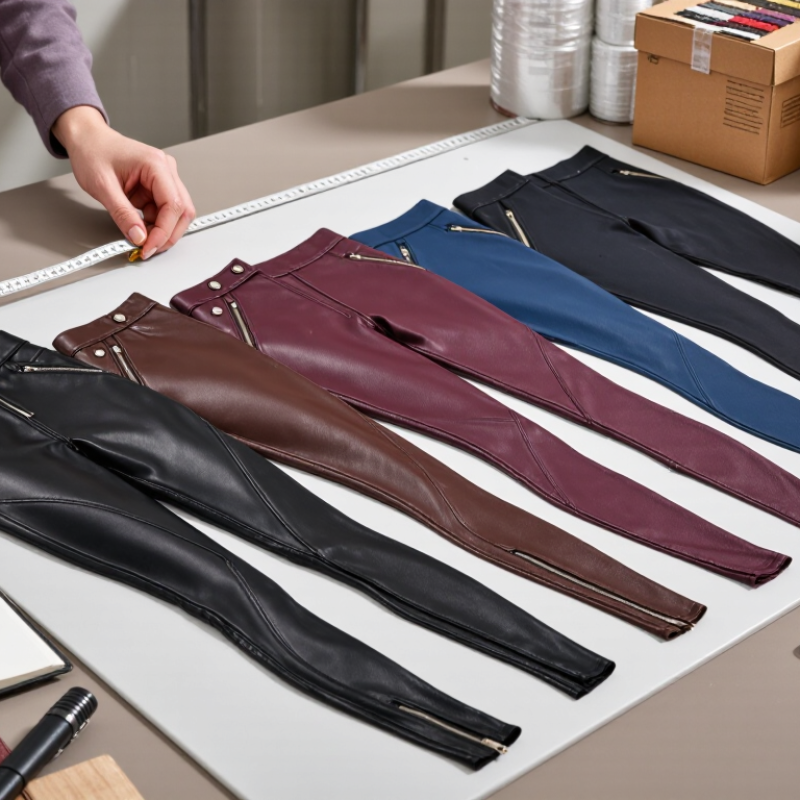
China’s leather-leggings wholesale market is not one uniform category. Suppliers may offer genuine leather, PU-coated stretch fabric, or bonded materials. Their feel, stretch recovery, and care requirements differ. Textile Exchange’s 2024 Materials Market Report estimates global fiber production reached 124 million tonnes in 2023, with polyester accounting for about 57%. This is not a leggings market-size estimate, but it offers useful context for the synthetic stretch fabrics used in many styles. Ask suppliers to specify each material layer, rather than describing a product only as “leather look.” Even a small black swatch can show differences in shine and shade.
Tips: Request a sample before confirming bulk production. Check the waistband after stretching, inspect seam edges, and compare the sample’s color under daylight. Confirm size tolerances and material composition in writing.
Supplier listings can be incomplete, so photos alone are weak evidence. One point worth reconsidering: a low unit price may not reflect the final cost if lining, packaging, or quality checks are excluded. Compare quotations using the same specifications, then ask how the supplier handles defects across a production batch.
Types of Leather Leggings Suppliers and Their Capabilities
Wholesale buyers typically encounter three kinds of leather leggings suppliers in China: factories with in-house production, specialist garment workshops, and trading companies. Factories may handle pattern making, cutting, sewing, and quality checks under one roof. Specialist workshops often focus on stretch fabrics, bonded materials, or particular finishes. Trading companies can coordinate several factories and help consolidate orders, but buyers should confirm who controls production.
Capabilities depend on equipment and material access. Ask whether the supplier can test waistband recovery, seam strength, color transfer, and surface cracking after stretching. Textile Exchange’s Materials Market Report 2024 estimated global fiber production at 124 million tonnes in 2023, with polyester representing 57 percent. That scale matters: leggings may combine stretch knits with coated or laminated surfaces, so a supplier’s fabric expertise can affect fit and durability. Request material specifications and test records, not just a polished sample.
A factory may offer lower unit costs but require larger orders; a trading company may accept smaller runs while adding coordination costs. Samples matter. Inspect the inside seams, pocket edges, and waistband after repeated wear and washing. No supplier is perfect. A strong sample can still conceal uneven bulk production, so agree on inspection criteria and approve a pre-production piece. One detail worth questioning: suppliers sometimes describe different coatings with the same “leather-look” label. Ask for the exact material composition before comparing quotations.
Materials, Manufacturing Processes, and Quality Standards
For wholesale leather leggings, specify the material before comparing prices. Genuine leather varies in thickness, grain, and stretch; coated textile uses a fabric backing with a polyurethane surface. Ask suppliers to identify each component and provide a bill of materials. Textile Exchange’s Materials Market Report 2024 estimates that global fiber production reached 124 million tonnes in 2023, with polyester accounting for 57%. That scale makes the backing fabric worth checking, not just the visible finish.
Production details affect fit and durability. Request the leather or coated fabric thickness, stretch direction, and recovery after repeated extension. Inspect seam samples at the waistband, inner thigh, and knee, where movement puts pressure on stitches. ISO 12947 abrasion testing can assess surface wear, while ISO 105-X12 evaluates color transfer from rubbing. Set acceptance limits before ordering; a test method alone does not guarantee a good result. Small differences matter.
For leather, ask how hides are sorted and finished, and whether the tannery has undergone an environmental audit, such as one conducted under Leather Working Group protocols. For coated fabrics, check for peeling, cracking, and color change after flexing. Review current test reports for the actual production material, not a similar sample. Samples can mislead. A practical sourcing weakness is that buyers sometimes approve appearance first and clarify performance later; correcting that order can prevent costly surprises.
How to Compare Supplier Pricing, Minimum Orders, and Lead Times
When comparing China leather leggings suppliers, look beyond the quoted price. Ask whether it includes fabric, lining, trims, packaging, and inspection. A low unit cost may rely on a higher minimum order or simpler construction. Request a written quote for the same design and specifications from each supplier. That makes differences easier to spot. Sample charges and shipping can also change the real cost.
Minimum orders vary by material, color, and size range. Ask whether the minimum applies to the whole order or each color. For example, a supplier may accept 300 pieces overall but require 100 per color. Confirm whether sizes can be mixed. Then compare lead times for sampling and bulk production separately. Add time for revisions, final inspection, and freight. A quoted schedule is not a guarantee. Small details matter.
Tips: Request a dated production schedule and ask what could delay it. Check how the supplier handles material shortages or a sample that needs changes. Keep key specifications in writing, including waistband width, seam finish, and color tolerance. A spreadsheet can look precise, but it cannot predict every delay; that limitation is worth remembering.
Supplier Verification and Wholesale Order Management
Supplier verification for leather leggings should begin with evidence, not polished catalog photos. Ask for a current sample and compare its material, lining, stretch, stitching, and waistband with the written specification. Confirm whether “leather” means genuine leather or a coated alternative; vague wording can cause costly misunderstandings. Check business documents and production capabilities, then request recent inspection records or arrange an independent factory visit. A sample is only a starting point.
Look closely at practical details. Measure the garment flat, test seams after stretching, and note color differences under daylight. Ask how the supplier controls size grading and handles rejected pieces. A neat sample does not guarantee consistent bulk production. Even a detailed inspection report can miss defects, so agree on measurable acceptance criteria before ordering. Leave room to revise them after a pilot run.
Manage the wholesale order with a signed specification sheet covering materials, sizes, colors, labels, packaging, quantities, and delivery dates. Break production into clear milestones: sample approval, material confirmation, cutting, sewing, and pre-shipment inspection. Keep decisions in one dated record, including changes made through email or messaging. It feels repetitive, but scattered notes create disputes. Confirm carton counts and packing details before dispatch, and allow a realistic buffer for rework or shipping delays. A spreadsheet helps, though someone still needs to verify its entries.