How to Choose Poly Net Fabric for Global Sourcing in 2026?
Choosing Poly Net Fabric for global sourcing in 2026 requires more than comparing price per roll. Textile Exchange’s Materials Market Report 2024 estimates that global fiber production reached 124 million tonnes in 2023. It may rise toward 160 million tonnes by 2030. Polyester remains the dominant fiber, representing about 57% of total output. These figures signal strong supply capacity, but they also expose sourcing risks. Recycled content claims, energy use, traceability, and factory consistency need careful verification.
In practice, buyers should examine denier, mesh aperture, GSM, roll width, tensile strength, and coating performance. A 120-centimeter roll can simplify cutting, while uneven openings may create visible defects in sportswear or filtration applications. Request batch samples, test reports, and chain-of-custody evidence before approving volume production. Ellen MacArthur, a leading circular-economy expert, states, “Waste is a design flaw.” Her principle applies directly to fabric selection. Better specifications can reduce trimming waste, rejected rolls, and unnecessary replacement orders.
However, no global report answers every factory-level question. That gap matters. A supplier may list recycled polyester, yet provide limited proof of its origin. Certifications can also vary in scope and validity. Buyers should therefore compare documents, inspect production controls, and test finished Poly Net Fabric independently. The most reliable decision balances performance, verified sustainability, delivery stability, and total landed cost. It is not always the cheapest option. Sometimes, the safer choice is the fabric with clearer evidence.
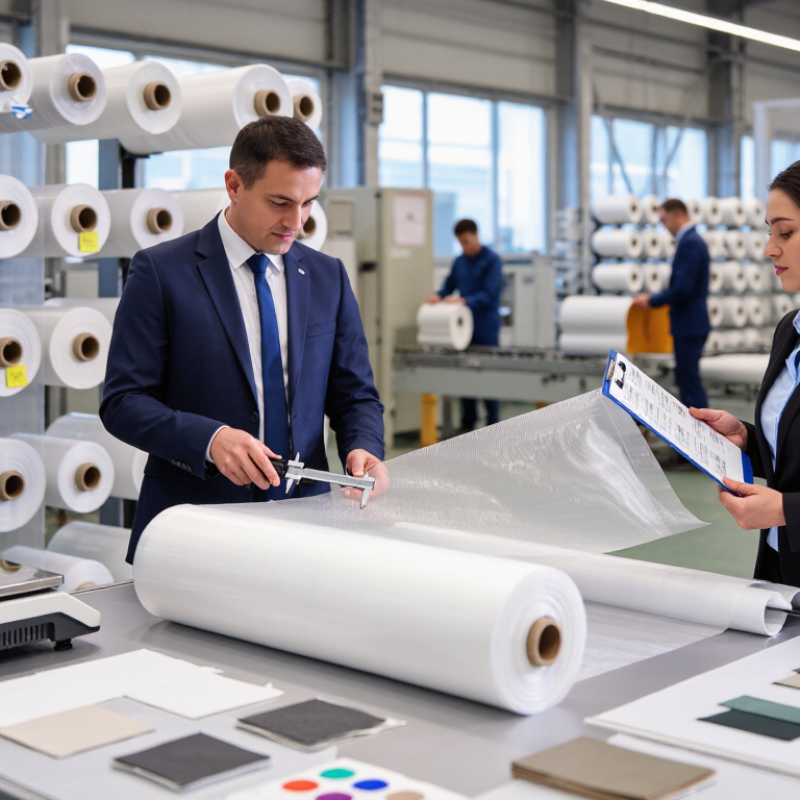
Define Poly Net Fabric by Fiber Type, Mesh Size, GSM, and End Use
When sourcing poly net fabric in 2026, define the material before comparing prices. Start with the fiber type. Polyester offers strength, dimensional stability, and broad color options. Recycled polyester may support sustainability goals, but confirm its recycled content and certification documents. Polyethylene can provide light weight and useful moisture resistance. The right choice depends on exposure, tension, and expected service life. Ask for a technical data sheet.
Mesh size controls airflow, visibility, filtration, and insect resistance. Measure the opening consistently, because suppliers may report mesh count or aperture size. These figures are not interchangeable. GSM shows fabric weight, but it does not fully predict performance. A heavier fabric can still tear if the yarn or knitting structure is weak. Request samples and check thickness, edge stability, and tensile strength.
End use should guide every specification. Shade structures may need UV resistance and reinforced hems. Agricultural nets require suitable opening sizes and reliable outdoor durability. Sports barriers need strong seams and controlled stretch. In my sourcing experience, small sample tests often reveal problems hidden in catalogs. Test the fabric under realistic heat, moisture, tension, and handling conditions. Allow practical tolerances. Perfect measurements are rarely maintained in production. A clear inspection plan should cover color, roll length, GSM, mesh size, and packaging. Recheck critical data before approving bulk production.
Compare 30–300 GSM Weight Ranges and 1–10 mm Mesh Openings
How to Choose Poly Net Fabric for Global Sourcing in 2026?
Poly net fabric selection starts with weight and mesh opening. A 30–60 GSM net feels light and flexible. It suits covers, lining, and low-load separation. From 80–150 GSM, the fabric offers better shape retention. Heavy 180–300 GSM grades resist abrasion and repeated handling. Mesh openings from 1–3 mm provide finer filtration. Openings from 4–10 mm improve airflow and reduce material use. Textile Exchange’s Materials Market Report 2024 states that polyester represented 57% of global fiber production in 2023. That scale supports broad supply, but quality still varies between mills.
Ask suppliers for GSM tolerance, opening tolerance, yarn diameter, and tensile results. ISO 3801 can verify fabric mass per unit area. Request samples cut from the roll edge and center. A 120 GSM sample may not represent the full shipment. I have seen acceptable samples fail after washing. That detail is easy to miss. Confirm UV exposure, moisture, temperature, and seam performance before approval.
Tips: Match 1–2 mm openings with fine screening needs. Choose 3–6 mm for balanced airflow and strength. Use 7–10 mm when ventilation matters more than containment. Compare actual test values, not catalogue ranges. Add a 5–10% weight tolerance only after performance testing. Record every result in the purchase specification. Suppliers may resist this step. It prevents expensive arguments later.
How to Choose Poly Net Fabric for Global Sourcing in 2026?
This sourcing guide compares common screening ranges for poly net fabrics from 30–300 GSM and 1–10 mm mesh openings. Smaller openings and lower GSM are generally suited to lightweight screening and separation, while larger openings and higher GSM can provide greater airflow, drainage capacity, and structural support. Actual performance depends on polymer type, yarn diameter, weave or knit construction, coating, and required tensile strength. Treat the ranges as a preliminary specification guide and confirm samples before purchasing.
Evaluate UV Resistance, Tensile Strength, and 500–2,000-Hour Testing
When sourcing poly net fabric in 2026, request measured performance, not vague claims such as “UV protected.” Polyethylene and polypropylene can lose strength under sunlight, heat, and moisture. Ask suppliers to identify polymer type, coating, yarn diameter, mesh opening, and stabilizer content. A 2024 OECD report estimated global plastic production at 460 million tonnes in 2019. This scale makes traceable material selection increasingly important.
Use tensile testing before and after accelerated weathering. ASTM G154 and ISO 4892-3 provide recognized methods for fluorescent UV exposure and condensation cycles. Require results at 500, 1,000, and 2,000 hours. Record breaking force, elongation, color change, and visible cracking.
A practical purchasing benchmark is 70% tensile-strength retention after 1,000 hours, but it is not a universal standard. Outdoor results still depend on latitude, installation angle, dust, and temperature.
Inspect the test sample yourself. A brittle edge can reveal poor formulation. Compare machine-direction and cross-direction strength, because woven nets often fail unevenly. Do not convert 2,000 chamber hours directly into outdoor years; that shortcut is unreliable. Independent laboratory reports should include specimen dimensions, irradiance, cycle temperature, and test deviation. One weakness remains: accelerated testing cannot reproduce every climate. Therefore, request field samples from a similar region before approving large-volume production.
Verify REACH, OEKO-TEX, GRS, and 20–100% Recycled Polyester Claims
When choosing poly net fabric for global sourcing in 2026, verify every sustainability claim at lot level. Textile Exchange’s Materials Market Report 2024 estimated global fiber production at 124 million tonnes in 2023. Polyester represented about 57% of output, while recycled polyester remained near 12% of polyester production. The numbers are significant, but percentages alone prove little.
REACH is a regulatory compliance check, not a recycled-content certificate. Request recent laboratory reports for dyes, coatings, plasticizers, and restricted substances. Check the test date, fabric composition, laboratory accreditation, and production lot. OEKO-TEX certification should match the exact article, color range, and certificate scope. A generic supplier letter is not enough.
For claims between 20% and 100% recycled polyester, ask for GRS certification, scope details, and transaction certificates covering the shipment. Compare the certificate quantity with invoices, packing lists, and roll labels. Textile Exchange chain-of-custody rules require controlled material tracking, yet paperwork can still contain mismatched dates or quantities. Inspect three rolls physically: the label, width, weight, and composition should agree. Be careful with “100% recycled” wording, especially when elastane, coatings, or mesh finishes are present. Standards and accepted documents can change. Recheck the current requirements before contracting. That extra check is easy to skip. It is also where sourcing mistakes begin.
Assess MOQ, Lead Time, Landed Cost, and 2026 Supplier Risk Metrics
For global poly net fabric sourcing in 2026, MOQ should match real demand, not factory ambition. Request three quotations at different volumes, such as 500, 2,000, and 10,000 meters. Compare setup charges, color minimums, inspection fees, and leftover yarn exposure. A low MOQ can still create a higher landed cost. Ask for production samples before signing a volume agreement.
Lead time needs separate measurement. Record yarn preparation, weaving, dyeing, finishing, packing, and port transfer. Require a dated production schedule, not a general promise. UNCTAD’s Review of Maritime Transport 2024 notes continued disruption risks across shipping routes. Build a buffer of 10 to 14 days for ocean delays. That may feel excessive. It is not always enough.
Calculate landed cost per usable meter. Include fabric price, tooling, inland freight, insurance, duty, testing, bank charges, and defect allowance. The World Bank’s Logistics Performance Index 2023 shows major differences in customs, infrastructure, and shipment reliability across countries. Track supplier risk monthly through on-time delivery, defect rate, capacity utilization, audit findings, financial stress signals, and single-source dependency. The WTO reported global merchandise trade growth of 2.7% in 2024, with further expansion expected in 2025. More demand can tighten capacity. However, these indicators remain imperfect. A clean audit cannot predict every port closure or raw-material shock. Keep two qualified suppliers, test the same mesh specification, and review the scorecard every quarter.