

In 2026, finding a dependable Waist Trainer Factory means looking beyond a low quote or polished website. Buyers need evidence that a supplier can turn clear product specifications into consistent, well-made garments. A physical sample can reveal a lot: straight seams, smooth fabric recovery, secure closures, and measurements that match the size chart. Small details matter.
A closer review should cover material sourcing, sample revisions, quality checks, minimum order quantities, production capacity, and lead times. Ask how fabric lots are tracked and how defective pieces are handled. Request relevant test reports or certifications, then verify that they apply to the materials and products being offered. Clear answers are useful. Vague promises are not.
Communication deserves the same attention as construction. Notice whether the factory flags unclear measurements, explains design limits, and documents changes before production begins. A supplier that asks careful questions may prevent costly surprises later. Still, no checklist removes every risk, and a sample cannot show every challenge in a large production run. It may be tempting to trust a confident sales pitch; I would pause and ask for specifics. This guide explores practical ways to compare factories, assess product quality, and choose a manufacturing partner with realistic expectations.
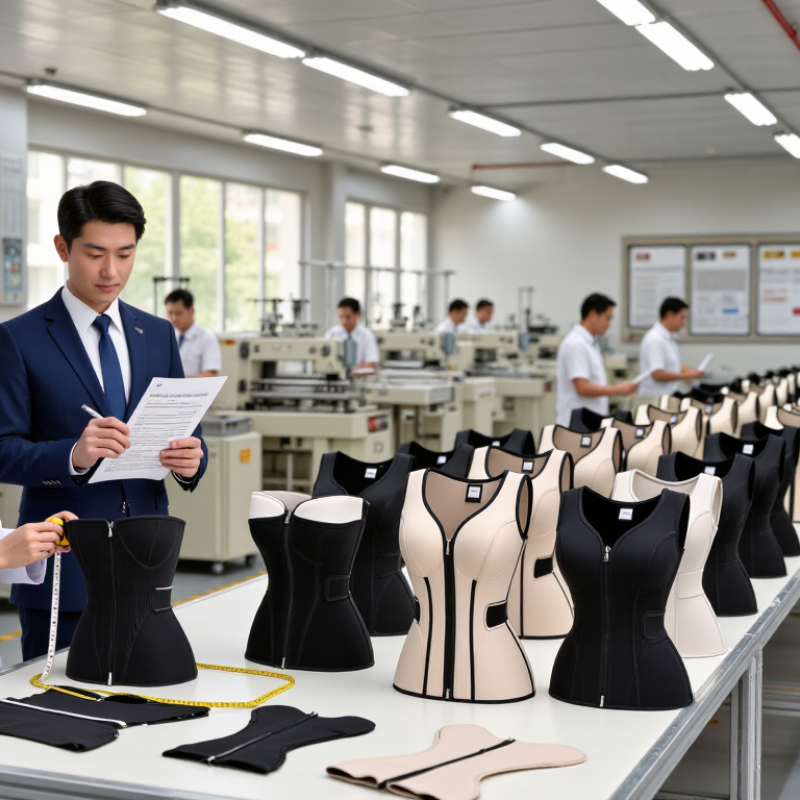
Before approaching a waist trainer factory, define the product in measurable terms. Specify the intended fit, coverage, compression level, and size range. A short, underbust style needs different patterning from a longline design. Note whether the garment uses hook-and-eye closures, a zipper, flexible boning, or adjustable straps. Small details matter.
Choose materials with use and comfort in mind. Record the fabric composition, stretch and recovery needs, lining, trim, and preferred color. Ask for measurements at key points, such as the waist, front length, and back length. A reference sample or annotated sketch can prevent vague interpretations. Avoid relying on phrases like “firm compression” without defining how the garment should feel and fit.
Then list the factory capabilities your project actually requires. Confirm that it can develop patterns, make samples, grade sizes, and inspect finished garments. Ask how it checks stitching, closure alignment, and measurement tolerances. Request a sample before approving bulk production, and compare it with your written specifications. Clarify minimum order quantities, sample fees, production timing, and how defects are handled. These questions can feel overly detailed, but unclear requirements often cost more later. I would revisit the size chart after fitting samples; it is easy to assume one measurement system will suit every body.
A factory’s general apparel experience is not enough; ask about its work with structured compression garments. Waist trainers require more than neat stitching. Their panels, boning channels, closures, and stretch fabrics must work together under repeated tension. Ask for examples of comparable products, including the materials used and the production challenges encountered. A glossy catalog proves little. Request close-up photos of seams and inside construction, plus a sample made to your specifications.
Discuss fit testing with the factory team. Ask how they grade patterns across sizes and check that closures remain aligned when the garment is worn. A practical review might include inspecting seam slippage, measuring panel dimensions, and trying samples on different body types. These checks do not guarantee a perfect fit, but they reveal how the factory handles problems. Review written quality procedures and recent inspection records where available. If answers stay vague, ask for a small pilot run before discussing larger quantities. I would not rely on years in business alone; even experienced teams can miss details. That caution can feel slow. It may save time later. Pay attention to whether the factory can explain its process clearly, acknowledge limitations, and make specific adjustments after sample feedback.
Verify Materials, Quality Controls, and Compliance
A reliable factory should identify each fabric by composition, weight, and supplier lot. Ask for material specifications and recent test reports, not just a swatch book. Stretch recovery matters: a garment may feel firm on day one but lose shape after repeated wear. Request test details for recovery, colorfastness, and seam strength. Small details matter.
Quality control should be visible on the production floor. Check how workers measure panels, inspect stitching, and record defects. Ask how many units are sampled from each batch and what happens when measurements fall outside tolerance. A neat sample is not proof of consistent production. Compare a pre-production sample with garments selected from a finished order. Keep dated records of approvals and changes.
Compliance depends on where the product will be sold. Ask for current documentation on labeling, fiber content, and applicable chemical or product-safety requirements for your target market. Have a qualified reviewer confirm that records match the actual materials and finished garment. Certificates can be incomplete or out of date; a factory’s confidence is not a substitute for verification. No audit catches everything, so revisit controls after material or process changes.
A strong waist trainer factory should prove repeatable output, not simply quote a large monthly capacity. Ask how many units it can make using your exact pattern, fabric, closures, and size range. Request production records for a comparable order, plus details on inspection and subcontracting. Compare quotes line by line: fabric weight, boning, hook-and-eye closures, labels, packaging, sampling, and minimum order quantity. A low unit price can hide setup fees or material substitutions. The first quote may still miss something; review the specification carefully.
Lead times need the same scrutiny. Request separate dates for sampling, material sourcing, bulk production, and shipment, then ask what could delay each stage. UNCTAD’s Review of Maritime Transport 2024 reports that maritime trade grew 2.4% in 2023 and projected 2% growth for 2024. That is useful context, not a guarantee of delivery: port congestion and route changes can still affect schedules. Build a buffer, and confirm whether quoted dates mean factory dispatch or arrival at your warehouse.
Tips: Send every factory the same tech pack and order quantity. Ask for a dated production schedule and a written breakdown of payment terms. Compare a sample against the approved fit and stitching before bulk production. A neat sample does not prove the line can repeat it at scale. Check again.
| Factory Profile | Best-Fit Products | Indicative Monthly Capacity | Indicative Unit Price (USD, EXW) | Typical MOQ | Sample Lead Time | Bulk Production Lead Time | What to Verify |
|---|---|---|---|---|---|---|---|
| Small specialist workshop | Simple elastic or fabric waist trainers; limited colors and construction options | About 5,000–20,000 pieces | $5–$10 per piece at 1,000+ pieces | About 300–500 pieces per style | 7–14 days | 30–45 days after sample approval and deposit | Ask for recent line output, size-run capability, material test reports, and a sample matching the production specification. |
| Mid-sized apparel factory | Boned or latex waist trainers, multiple sizes, private-label packaging, and moderate customization | About 20,000–80,000 pieces | $8–$16 per piece at 1,000+ pieces | About 500–1,000 pieces per style | 10–18 days | 25–40 days after sample approval and material confirmation | Confirm whether quoted capacity is dedicated to this product, how quality inspections are handled, and whether trims and packaging are included. |
| Large-scale compression-garment producer | High-volume waist trainers with engineered panels, multiple construction options, and repeat orders | About 80,000–200,000 pieces | $10–$22 per piece at 1,000+ pieces | About 1,000–2,000 pieces per style | 14–21 days | 20–35 days for a confirmed repeat order; first orders may take longer | Request evidence of available production slots, material traceability, in-line inspection procedures, and capacity during peak season. |
| Custom-development-focused factory | New patterns, specialty fabrics, custom boning, labels, and packaging | About 5,000–50,000 pieces, depending on the design | $12–$25+ per piece at 1,000+ pieces | About 500–1,000 pieces per style; custom materials may require more | 14–28 days | 35–60 days for a first production run | Get written approval for the pattern, grading, construction details, material substitutions, and ownership of custom tooling or patterns. |
Planning note: These are indicative sourcing ranges, not verified factory quotes or audited capacity figures. Actual pricing and lead times depend on fabric, boning, construction, order quantity, packaging, testing, and season. Request a dated quotation and confirm capacity, Incoterms, sample charges, and delivery schedule in writing.
A top waist trainer factory in 2026 should be easy to assess before you place an order. Pay attention to how its team answers practical questions. Can they explain fabric composition, size grading, stitching, and quality checks in clear terms? Ask who handles your account and how production updates are shared. A quick reply is useful, but a specific reply is better. If every answer is vague, pause. A polished catalog can still leave important gaps, and I would not treat a video call alone as proof of manufacturing capacity.
Tips: Request a sample made to your specifications. Check seam strength, hook alignment, and whether the fabric feels consistent across panels. Ask for a live factory walkthrough, then compare what you see with the sample and production details. Confirm the order quantity, sample approval process, timeline, and payment milestones in writing. Keep the messages and approved specifications together.
Before ordering, verify the factory’s business details and ask for recent production evidence, such as dated workshop photos or a short process video. Confirm that the facility can handle your expected volume without outsourcing steps you assumed were done onsite. Small inconsistencies matter. If a contact changes delivery estimates or avoids direct questions, ask for clarification and record the answer. It may feel overly cautious, but fixing a misunderstanding after production starts is harder. Even then, some uncertainty remains; build time for another sample review into your plan.