
What Are the Top Boys Clothes Wholesale Suppliers?

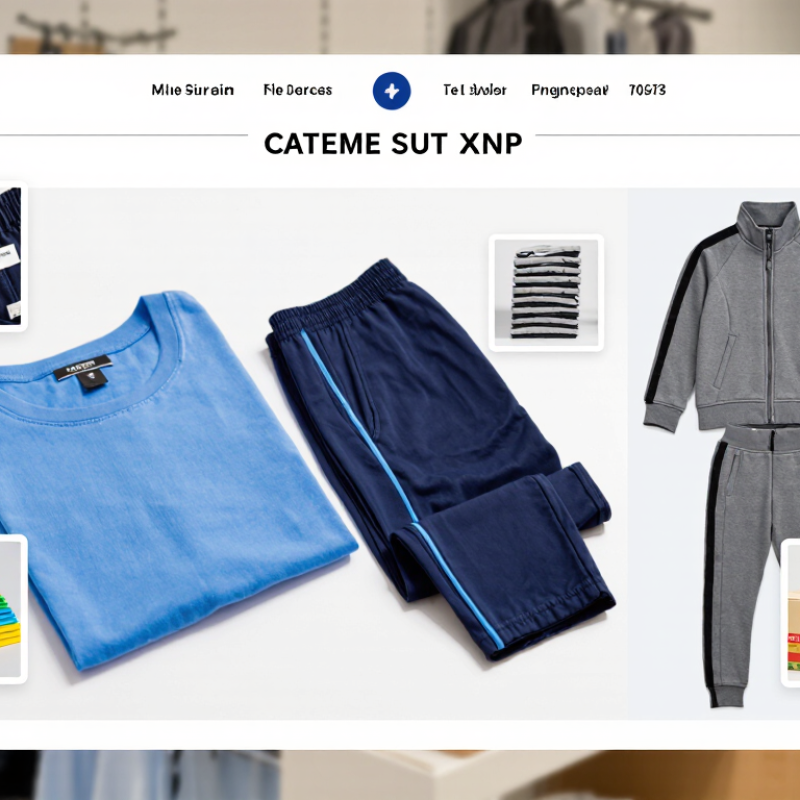
Finding reliable boys clothes wholesale suppliers is essential for retailers, online sellers, and children’s boutiques. The right supplier can affect product quality, profit margins, delivery times, and customer trust. A soft cotton T-shirt, reinforced school trousers, or a neatly packed tracksuit can reveal more than a polished catalog. Small details matter.

This guide examines leading wholesale supplier options and the standards buyers should compare. It considers fabric quality, size consistency, minimum order quantities, sample policies, pricing, production capacity, and shipping reliability. Supplier experience also deserves attention. A company serving established retailers may provide clearer documentation and more consistent support. However, reputation alone is not enough. Buyers should request samples, inspect stitching, check care labels, and confirm product safety requirements for their target market.

Look closely. Ask practical questions.

A dependable supplier should communicate clearly about stock levels, lead times, payment terms, and return procedures. Verified business details, independent reviews, and transparent product information can strengthen purchasing decisions. Still, no supplier is perfect. Delays happen, colors may vary, and a sample may not represent every production batch. That possibility deserves honest consideration.

The following overview compares wholesale sources through an experience-based and professional lens. It aims to help buyers reduce avoidable risks while building a practical sourcing process. Whether you need seasonal collections or steady everyday basics, careful evaluation remains more valuable than choosing the lowest price.
What Are the Top Boys Clothes Wholesale Suppliers?

Define the Boys’ Wholesale Market Using 2024 Children’s Apparel Data

What Are the Top Boys Clothes Wholesale Suppliers?

The 2024 children’s apparel market is shaped by comfort, price, and fast size changes. Boys’ wholesale clothing is not one uniform category. It includes school basics, sportswear, seasonal layers, occasion outfits, and durable playwear. Recent market data shows that parents increasingly compare prices online before buying. They also expect softer fabrics, flexible fits, and clearer size information. For wholesalers, this creates demand for practical collections rather than oversized seasonal inventories.

A reliable supplier should provide consistent measurements, fabric details, product photos, and realistic delivery estimates. Buyers should examine minimum order quantities and reorder speed. A low unit price may hide weak stitching or unpredictable sizing. In my experience, sample testing reveals more than a polished catalog. Check pocket seams, waistbands, zippers, and wash shrinkage. Small defects become expensive when hundreds of pieces arrive. Suppliers serving the 2024 market also need adaptable stock planning. Weather changes and school calendars can quickly affect demand. Forecasting is useful, but never perfect.

Tips: Compare at least three samples before placing a large order. Track sell-through by size, color, and season. Ask whether replacement pieces are available for damaged items. Avoid choosing only by price. A dependable supplier should communicate clearly, document product specifications, and correct mistakes without unnecessary delay. Some buyers may also consider recycled fibers, but claims require credible certification. Sustainability language alone proves little.

Classify Suppliers by MOQ, Factory Capacity, and 30–60-Day Lead Times

Wholesale boys' clothing suppliers differ less by catalog photos than by operating discipline. In sourcing work, I compare MOQ, monthly output, and confirmed production calendars before discussing price. Small workshops may accept 50 to 100 pieces per style. They suit test orders and narrow size runs. However, fabric choices can be limited, and repeated colors may vary slightly. Ask for a pre-production sample. Keep records.

Mid-sized factories often set MOQs between 200 and 500 pieces per style or color. Their cutting rooms can support several size ratios, while quality teams check seams, labels, and wash shrinkage. This tier usually fits growing retailers needing reliable replenishment. Request capacity figures for your peak month, not only an annual number. A factory claiming 100,000 pieces monthly may already be committed to other buyers. Capacity is not availability.

Large facilities can manage 1,000-plus pieces per style and coordinate fabric purchasing earlier. They may offer better consistency, but their approval process is slower. For 30- to 60-day lead times, confirm fabric booking, sample approval, production, inspection, and shipping separately. A written timeline should show buffer days. In my experience, delays often begin with late artwork or unclear measurements, not sewing. I still allow extra time. Deadlines move. Choose suppliers that share production photos, inspection records, and realistic recovery plans when targets slip.

What Are the Top Boys Clothes Wholesale Suppliers? - Classify Suppliers by MOQ, Factory Capacity, and 30–60-Day Lead Times

Supplier Category Typical MOQ per Style Typical MOQ per Color Factory Capacity per Month Standard Production Lead Time 30–60-Day Delivery Fit Best for Main Trade-Off
Small-batch workshop 30–100 pieces 10–30 pieces 1,000–10,000 pieces 15–30 days after approval Excellent New brands, test collections, limited seasonal drops Higher unit cost and fewer fabric or trim options
Small and medium garment factory 100–300 pieces 30–100 pieces 10,000–50,000 pieces 25–45 days after approval Excellent Independent retailers and growing e-commerce sellers Capacity may be limited during peak seasons
Mid-sized export factory 300–1,000 pieces 100–300 pieces 50,000–200,000 pieces 30–50 days after approval Very good Established wholesale buyers and multi-store retailers More formal sampling, payment, and quality-control procedures
Large vertically integrated factory 1,000–3,000 pieces 300–1,000 pieces 200,000–1,000,000+ pieces 40–60 days after approval Good National chains, large distributors, and repeat programs Higher order commitments and stricter production scheduling
Stock-lot and ready-to-ship wholesaler 1–20 pieces per size Available stock only Not applicable; inventory-led supply 2–10 business days Excellent Fast replenishment, trial orders, and opportunistic buying Limited size runs, colors, continuity, and customization
Private-label program with approved designs 300–1,000 pieces 100–300 pieces 20,000–150,000 pieces 35–55 days after sample approval Very good Retailers seeking custom labels, packaging, and recurring styles Artwork, packaging, and compliance approvals can extend the schedule
Custom cut-and-sew specialist 500–2,000 pieces 100–500 pieces 15,000–100,000 pieces 45–60 days after final sample approval Possible with early booking Distinctive fits, technical details, and premium construction Pattern development, fabric sourcing, and fitting require more time
Basic knitwear production line 500–2,000 pieces 200–500 pieces 50,000–300,000 pieces 35–60 days after yarn and color approval Good T-shirts, polo shirts, sweatshirts, and repeat core products Yarn availability, dyeing schedules, and color minimums affect timing
Uniform and schoolwear manufacturer 300–1,500 pieces 100–500 pieces 30,000–250,000 pieces 30–55 days after size-set approval Very good Schools, clubs, distributors, and repeat institutional orders Demand is seasonal and size-assortment planning is important
Premium small-run manufacturer 100–500 pieces 30–150 pieces 5,000–30,000 pieces 30–50 days after final approval Excellent Higher-quality basics, boutique collections, and premium fabrics Unit prices are typically higher than mass-market production

Planning note: The figures are practical industry benchmark ranges for boys’ apparel wholesale programs. Actual minimums, capacity, and lead times vary by product complexity, fabric availability, order quantity, testing requirements, shipping method, and peak-season booking.

Verify CPSIA, ASTM, and Fiber-Labeling Compliance Before Ordering

What Are the Top Boys Clothes Wholesale Suppliers?

A dependable boys’ clothing wholesaler should provide more than attractive photos and low prices. Before ordering, request CPSIA compliance records for children’s garments and accessories sold in the United States. Ask whether required third-party testing was completed by an accepted laboratory. The paperwork should identify the product, testing date, materials, and responsible business. A supplier’s promise is not enough.

ASTM requirements may apply to certain clothing features, trims, sleepwear, or related products. Confirm which standard fits each item, rather than accepting a generic “ASTM approved” statement. Check snaps, buttons, zippers, drawstrings, and decorative parts by hand. A loose metal snap on a sample can reveal a larger production problem. Small details matter.

Fiber labeling also deserves close attention. Labels should state fiber content accurately and use acceptable terminology for the target market. Compare the label with the fabric specification, purchase order, and laboratory report. I would request a pre-shipment sample and photograph every label before approving bulk production. This takes time. It can prevent relabeling costs and delayed inventory.

A careful sourcing process should also confirm country-of-origin markings, care instructions, tracking information, and documentation retention. Requirements can change, and standards may differ by product category or sales destination. I once treated supplier certificates as final proof; that approach was too optimistic. Independent verification is safer, especially when blends, coatings, or children’s sleepwear are involved. Suppliers who answer specific questions clearly are easier to evaluate than those offering vague compliance language.

Compare Unit Costs, Shipping Fees, and Wholesale Margin Benchmarks

A practical review of boys’ clothing wholesalers starts with the unit cost, not the catalog price. Compare identical items by fabric weight, stitching quality, size range, and packing method. A cotton T-shirt may cost $3.20 at 500 units, while a heavier version costs $4.10. That difference matters when customers expect durability. Request a pre-production sample. Photos often hide thin collars and uneven seams.

Shipping can change the decision. Ask for both delivery time and total freight cost. For example, 500 shirts may require $180 by consolidated sea freight, but $620 by air. Divide freight by units before comparing suppliers. The real landed cost becomes $3.56 by sea in this example. Include duties, inspection fees, local delivery, and possible repacking expenses. Small fees accumulate quickly.

Wholesale margins need realistic benchmarks. Many retailers target a gross margin near 45% to 60%, depending on season, returns, and sales channels. If the landed cost is $3.56, a $7.50 wholesale price creates a $3.94 gross profit. That is not the final margin. Payment fees, storage, markdowns, and damaged stock reduce it. I still make this mistake sometimes: I compare the cheapest unit and overlook slow shipping. A 10% lower price may be useless if late delivery misses a school-season launch. Keep at least two supplier quotes, and test the numbers with a small order before committing.

Rank Top Boys’ Clothing Suppliers by Quality, Price, and Reliability

The top boys’ clothing suppliers should be ranked by quality, price, and reliability, not catalog size. I use a practical 40/30/30 score: 40% quality, 30% landed price, and 30% delivery reliability. Quality-led suppliers rank highest when samples show stable sizing, neat seams, colorfastness, and low shrinkage. The 2024 Textile Exchange Materials Market Report states that polyester represented about 59% of global fiber production in 2023. Therefore, buyers should request fiber details and recycled-content evidence before placing large orders. A soft fabric is not always a durable fabric.

Value-focused suppliers deserve the second position. Compare total landed cost, minimum order quantity, packaging, duties, and defect allowances. The cheapest unit price may hide expensive returns or slow replenishment.

Reliability should decide close results. Ask for recent on-time delivery records, production capacity, inspection procedures, and a backup plan for fabric shortages.

The 2023 Fashion Transparency Index reported that only 1% of assessed companies disclosed complete supply-chain living-wage coverage. That figure is a useful warning. Supplier documents require checking, not blind trust. No ranking is perfect.

Tips: Order a small sample batch first. Wash each size twice. Measure shrinkage, stitching, and color transfer. Request a written delivery schedule and inspection standard. Keep payment milestones tied to verified production progress. I would also compare three suppliers using the same specification sheet; otherwise, price comparisons become misleading. A polished product page proves very little.

Go to Top