

For global buyers, choosing a clothing website in China involves more than finding attractive prices. Reliable product details, clear size charts, responsive communication, and realistic shipping estimates all matter. A polished homepage is useful, but it cannot confirm fabric quality or stock accuracy. Buyers should compare these practical signals before placing an order.
China’s online retail market reached RMB 15.42 trillion in 2023, up 11 percent year over year, according to the National Bureau of Statistics of China. Online sales of physical goods totaled RMB 13.02 trillion. These figures show the market’s scale, not the reliability of any individual seller. McKinsey’s State of Fashion 2024 also highlights ongoing uncertainty and value-conscious consumers, making transparent pricing and product information especially important. Details matter. At the product-page level, check garment measurements, material descriptions, order minimums, and return terms. A few missing details can change the buying decision.
E-commerce pioneer Jeff Bezos wrote, “We see our customers as invited guests to a party, and we are the hosts.” That customer-first principle offers a useful test for any clothing website: does it make the buying process clear and considerate? This guide introduces ten platforms for global buyers, with attention to product range, usability, and sourcing information. No list is perfect. Platform policies and seller quality can change, so verify current terms directly before committing to an order.
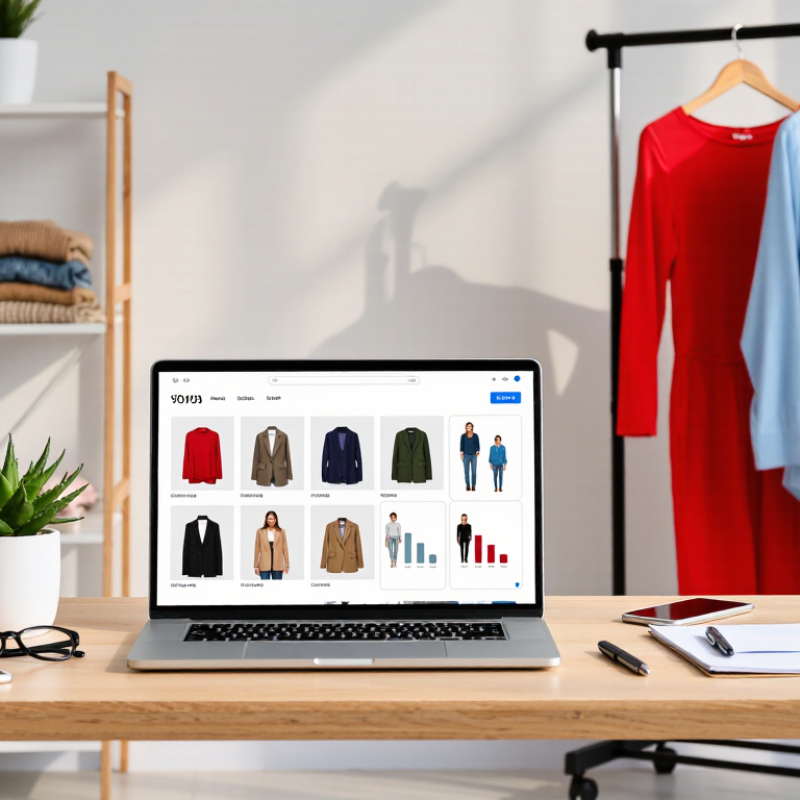
China’s online clothing market connects global buyers with a wide range of everyday apparel, seasonal styles, and production options. Digital storefronts make it easier to compare fabric descriptions, garment measurements, and color choices before placing an order. Some sellers also support international shipping, though delivery times and available destinations vary. A polished product photo is useful, but it cannot show every detail. Check close-up images and ask about fabric weight, lining, and stretch when those features matter.
Tips: Compare garment measurements with a similar item you own, not just a size label. Confirm the shipping estimate, return terms, and any extra charges before checkout. Save the product description and seller messages. Small steps help.
Global access still has practical limits. Size charts may use different measurement conventions, and translated descriptions can leave out important details. Ask clear questions, especially about seams, care instructions, and whether colors may differ under indoor lighting. Keep expectations realistic: a low price does not guarantee consistent finishing, and reviews may not reflect your exact order. I would treat a first purchase as a small test, even when the listing looks convincing. Also, cross-border delivery can take longer during busy shopping periods. Check tracking updates, and leave room for delays.
A useful clothing website gives more than attractive product photos. Check whether listings show fabric composition, garment measurements, available colors, and clear front and back images. A size chart should use specific measurements, not vague labels such as “regular fit.” Compare those numbers with a garment you already own. Small differences matter.
Tips: Ask for a close-up of the fabric, confirm sample availability, and request a written quote that separates product, packaging, and shipping costs. Save the replies.
Before placing a large order, review minimum quantities, production times, payment options, and the stated process for damaged or incorrect goods. Look for accessible customer support and consistent company details across the site. Reviews can help, but repeated generic praise is not strong evidence. A polished storefront can still leave important questions unanswered. I would treat a fast response as useful, not as proof of reliability. Start with a small order when practical, check the delivered quality, and keep written records of agreed measurements and delivery dates.
For international buyers, choosing Chinese clothing websites is less about the lowest price and more about reliable details: fabric composition, garment measurements, minimum order quantities, and delivery terms. China’s National Bureau of Statistics reported that online retail sales of physical goods reached 13.02 trillion yuan in 2023, an 8.4% increase from 2022. That scale offers broad choice, but it does not guarantee consistent sizing or export support.
This guide compares ten Chinese clothing websites using practical checks: clear size charts, close-up product photos, stock information, and realistic dispatch estimates. For bulk orders, request a sample and confirm whether the quote includes packaging and freight. For individual purchases, check return deadlines and who pays return shipping. Small print matters.
Compare payment options, language support, parcel tracking, and customs paperwork before ordering. The World Trade Organization reported that global merchandise trade volumes fell 1.2% in 2023, showing how shipping conditions can shift. I would not rank a website by catalog size alone: photos can conceal thin fabric, and size conversions are not always reliable. Treat any shortlist as a starting point, then verify the specific item and delivery route. There is no perfect shortcut.
A practical review of the top ten clothing websites in China should compare more than catalog size. Some offer broad ranges, from cotton basics and knitwear to outerwear in several size runs. Others focus on narrower categories, which can make specifications easier to check. For global buyers, product photos are useful, but fabric composition, garment measurements, and sample availability offer stronger evidence.
Pricing needs context. Compare unit prices at the same quantity, then check sample fees, minimum order quantities, packaging, and shipping estimates. A low listed price may exclude important costs. Not always. Currency changes and seasonal stock can also shift a quote, so buyers should request dated, written pricing before committing.
Buyer services often reveal how workable an order will be. Check whether staff answer questions clearly, provide size charts, explain production times, and share quality-control details. Ask how defects or delayed shipments are handled. My first comparison would have overvalued polished product pages; they do not prove consistent sizing or reliable delivery. A small sample order can expose those gaps, though it adds time and cost.
Comparing Product Selection, Pricing, and Buyer Services
Scores use an illustrative 1–5 comparison scale and are not verified ratings of specific websites. Review current listings, fees, shipping terms, and buyer protections before purchasing.
Choosing among China-focused clothing websites is only the first step. Before paying, confirm whether items are in stock or made to order. Ask for a dated size chart, fabric composition, minimum quantity, and clear photos. Order a sample when fit or stitching matters. Small details matter.
Shipping quotes should specify dispatch time, carton dimensions, gross weight, tracking, and delivery terms. UNCTAD’s Review of Maritime Transport 2024 states that over 80% of world trade by volume travels by sea. This does not describe small parcels: courier shipping may suit samples, while consolidated sea freight can suit larger orders. Compare landed costs, including duties, taxes, brokerage, and possible storage fees. A low quote can mislead.
The World Bank’s 2023 Logistics Performance Index ranked China 19th among 139 economies. A national ranking cannot predict each seller’s dispatch speed or local customs clearance. Keep invoices, payment records, product descriptions, and tracking details together. Check your destination’s textile-labeling and import requirements with its customs authority before ordering. Allow extra time. Delivery estimates are easy to overtrust, so build in a buffer before seasonal launches.
The entries below describe common types of China-based online clothing channels rather than named companies or brands. Availability, order terms, and export services vary by seller; confirm all details before placing an order.
| No. | Website / Channel Type | Best For | Ordering Considerations | Shipping Options | Import Considerations |
|---|---|---|---|---|---|
| 1 | Cross-border B2B marketplace | Overseas retailers comparing multiple suppliers | Check minimum order quantity, sample availability, size charts, and whether prices include customization. | Some sellers arrange international delivery; larger orders may require a freight forwarder. | Confirm product descriptions, country-of-origin details, and the importer’s required documentation. |
| 2 | Domestic wholesale marketplace | Buyers sourcing ready-made apparel at wholesale quantities | Listings may be intended for domestic buyers. Confirm seller communication, payment terms, stock status, and domestic delivery costs. | Often shipped within China; overseas buyers commonly use a buying agent or consolidation warehouse. | Allow for agent fees, repacking, export handling, international freight, and destination-country duties. |
| 3 | Apparel-focused wholesale portal | Boutiques and small businesses seeking varied styles | Ask about mixed-size packs, color availability, restock timing, and the process for resolving quality issues. | International shipping may be available for some sellers; otherwise, domestic delivery and consolidation may be needed. | Check fiber-content and care-label requirements in the destination market before ordering. |
| 4 | Manufacturer-owned export website | Importers seeking direct production or repeat orders | Request a written specification, production timeline, sample approval, quality standards, and a clear quotation. | May quote courier, air, or sea freight; clarify who books transport and handles export paperwork. | Agree on the delivery term, declared value, packing list, commercial invoice, and inspection arrangements. |
| 5 | Factory and supplier directory | Buyers comparing production capabilities and sourcing options | Treat directory profiles as leads, not verification. Check business credentials, production capacity, references, and sample quality. | Shipping is usually negotiated directly with the supplier or a logistics provider. | Use a written purchase agreement and establish responsibility for inspections and export documents. |
| 6 | Domestic retail marketplace | Individuals or buyers testing a small assortment | Retail listings may not support bulk orders or overseas customer service. Confirm variants, return rules, and seller dispatch times. | Many sellers primarily deliver domestically; an export-capable intermediary may be required. | Small parcels can still be subject to customs declarations, taxes, and local product rules. |
| 7 | Discount and clearance outlet | Price-focused buyers purchasing available stock | Stock may be limited or non-replenishable. Confirm condition, assortment consistency, and whether sale items can be returned. | Shipping arrangements depend on the seller; consolidation can help combine purchases from different sellers. | Check that labels and product information meet local rules, even for discounted goods. |
| 8 | Social-commerce storefront | Buyers discovering styles through posts, communities, or creator content | Verify the seller independently and confirm the exact item, size, payment protection, and after-sales contact before paying. | International fulfillment is not guaranteed; ask whether the seller supports export shipping. | Keep transaction records and ensure customs declarations accurately describe the goods and value. |
| 9 | Livestream shopping channel | Shoppers evaluating fit, fabric, and styling in real time | Live demonstrations do not replace written specifications. Save item details and confirm sizing, material, and return terms. | Orders may be set up for domestic delivery only; ask about export services before purchase. | Check whether the payment and order records provide sufficient documentation for international shipment. |
| 10 | Custom and private-label sourcing portal | Businesses developing custom garments or private-label collections | Discuss minimum production runs, patterns, fabric sourcing, sample revisions, lead times, and ownership of artwork. | Production orders are commonly shipped by air or sea, depending on shipment size, budget, and deadline. | Review labeling, safety, intellectual-property, tariff-classification, and importer-of-record requirements for the destination country. |
Before ordering, request a sample where practical, verify the seller and payment terms, confirm the shipping arrangement, and check current customs, tax, labeling, and product requirements with the relevant authorities in the destination country.