

What Is a Tubular Lanyard and How Is It Used?

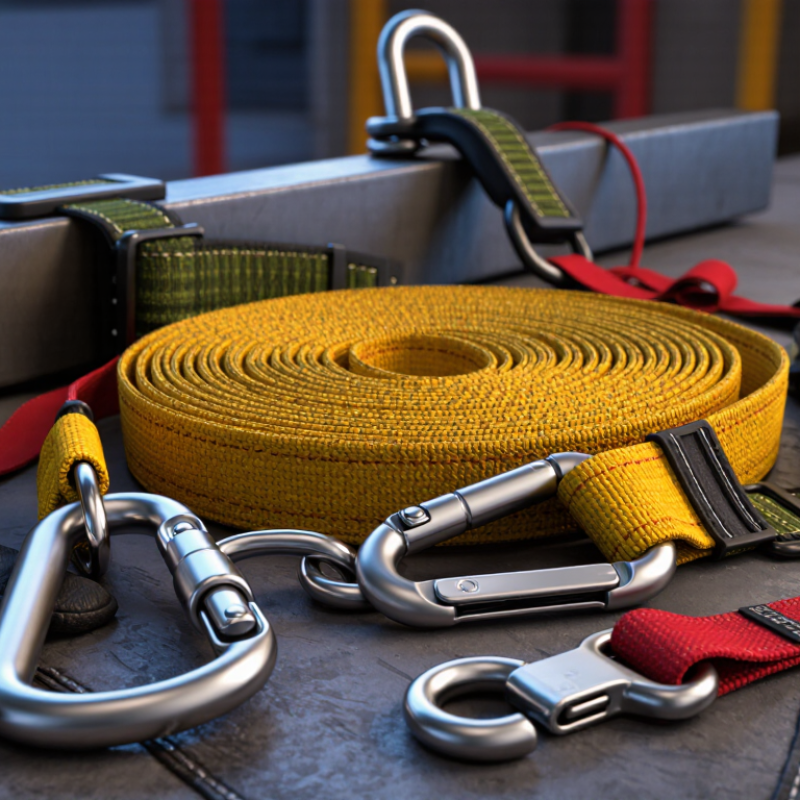
A Tubular Lanyard is a flexible webbing connector designed for controlled restraint, positioning, or fall-protection systems. Its woven tube structure feels softer than flat webbing. It can also distribute contact pressure more evenly around an attachment point. Workers may use it with harnesses, anchor straps, tool systems, or rescue equipment, depending on the manufacturer’s instructions.

“The connection is only as strong as the complete system around it,” says fall-protection educator David MacDonald. This practical warning matters. A lanyard may look durable while its stitching, hardware, or anchor remains unsuitable. A qualified professional should confirm the intended application, rated capacity, connector compatibility, and required clearance before use. A bright color does not prove safety.

Look closely.

Before each use, inspect the tubular webbing for cuts, pulled threads, chemical marks, melted fibers, crushed sections, or unusual stiffness. Check the end loops and metal fittings carefully. A lanyard exposed to sharp edges, heat, moisture, or repeated abrasion may lose strength without obvious dramatic damage. Remove questionable equipment from service and follow the maker’s inspection and replacement guidance.

This article explains what a Tubular Lanyard is, how its construction affects performance, and where it may be used responsibly. It also considers common mistakes, including confusing a positioning lanyard with a fall-arrest device. That distinction is easy to miss. Product labels, training, and applicable workplace standards must guide the final decision. Even experienced users can overlook one worn stitch or one incompatible connector. Safety depends on the entire arrangement, not the webbing alone.
What Is a Tubular Lanyard and How Is It Used?

Definition and Basic Structure of a Tubular Lanyard

What Is a Tubular Lanyard and How Is It Used?

A tubular lanyard is a flexible strap made from woven textile material. Its name comes from its hollow, tube-like construction. Unlike flat webbing, the material forms a rounded sleeve with a soft hand feel. This shape can improve flexibility, grip, and resistance to edge wear in some applications. Think of it as a protective fabric tube, not simply a narrow rope.

Its basic structure usually includes the tubular webbing, stitched termination points, and connecting hardware. The ends may hold loops, rings, clips, or other compatible attachments. Some designs contain an inner core, while others remain hollow. The exact construction depends on its intended use and rated load. It may support equipment handling, positioning, or recreational systems. A lanyard is only as dependable as the complete system. The tube is not magic. Stitching, connectors, and anchor points also matter.

Tips: Inspect the surface before every use. Look for cuts, frayed fibers, melted areas, loose stitching, or chemical stains. Check the hardware for cracks, distortion, or poor movement. Do not rely on appearance alone. Confirm the lanyard matches the required load and application. Follow the maker’s instructions, and remove damaged equipment from service. A common mistake is treating a soft, clean-looking strap as automatically safe.

Materials and Construction Methods Used in Tubular Lanyards

A tubular lanyard uses woven webbing formed into a hollow, sleeve-like structure. Polyester is common because it resists moisture, ultraviolet exposure, and stretching. Nylon offers softer handling and better energy absorption, but it can lose strength when wet. Material choice matters more than appearance.

Manufacturers usually weave the webbing on narrow looms, then fold or stitch connection points around metal hooks, rings, or adjustment parts. Dense stitching distributes force across several rows. Bar-tack patterns help prevent sudden seam separation. Some designs add an internal energy absorber, which tears controlled stitching during a fall. ANSI/ASSP Z359.13 addresses personal energy absorbers and lanyards, including arrest-force performance. OSHA reported 395 fatal construction falls in 2022, showing why small construction details deserve serious attention.

Field checks should examine frayed edges, flattened tubes, pulled stitches, chemical stains, and damaged hardware. A tubular shape can hide internal wear. That is easy to miss. Users should follow the manufacturer’s inspection schedule and remove questionable equipment from service. The U.S. Bureau of Labor Statistics recorded 844 fatal workplace falls, slips, or trips in 2023. The figure is broad, not lanyard-specific, but it reinforces the risk environment. Testing also has limits; laboratory loads rarely match a twisting worker, sharp edge, or wet platform. More careful design review is still needed.

What Is a Tubular Lanyard and How Is It Used? — Materials and Construction Methods Used in Tubular Lanyards
Dimension Typical Material or Specification Construction Method Common Use Key Performance Characteristics
Basic Structure Hollow, woven tubular webbing Warp and weft yarns are woven into a sleeve-like structure rather than a flat strap. General-purpose carrying, securing, climbing, rescue, and industrial applications Flexible, comfortable to handle, resistant to edge fraying, and capable of enclosing a core or cord.
Primary Fiber Nylon 6 or nylon 6,6 High-tenacity fibers are woven into the tubular webbing and may be solution-dyed or piece-dyed. Load-bearing lanyards, outdoor equipment, rescue systems, and tie-down assemblies High tensile strength, good abrasion resistance, and useful elasticity. Nylon absorbs moisture and may lose some strength when wet.
Alternative Fiber Polyester Continuous or staple polyester yarns are formed into a woven tube. Outdoor lanyards, marine environments, equipment restraints, and applications requiring low stretch Low moisture absorption, good ultraviolet resistance, dimensional stability, and lower elongation than nylon.
High-Strength Fiber High-modulus polyethylene or aramid fiber Specialty yarns are woven into a compact tube, sometimes combined with protective outer fibers. Weight-sensitive load systems, technical rescue equipment, and specialized safety assemblies Very high strength-to-weight ratio. Performance depends on heat resistance, abrasion protection, and the specific fiber construction.
Typical Width Approximately 10–50 mm for many general-purpose designs Width is controlled by loom settings, yarn size, weave density, and finishing tension. Narrow widths for tool lanyards and wider widths for load-bearing or handling applications Wider webbing generally offers improved handling and contact area, but width alone does not determine safe working capacity.
Tubular Wall Single-layer or double-layer woven wall Two layers may be woven together, folded, or stitched to create a thicker protective sleeve. Protecting an internal rope, improving grip, and increasing resistance to abrasion Double-layer construction can improve durability, but stitching quality and seam design remain critical.
Internal Core Optional rope, cord, shock-absorbing element, or load-bearing insert The core is inserted during assembly or enclosed during specialized weaving operations. Energy-absorbing lanyards, rescue lines, tool-retention systems, and protective sleeves The outer tube may provide abrasion protection and handling comfort, while the core supplies the primary mechanical function.
End Termination Bar-tack stitching, sewn loop, folded end, or hardware connection Webbing ends are folded and secured with multiple rows of high-strength stitching; hardware may be captured in the loop. Connecting hooks, rings, carabiners, buckles, clips, or attachment points Termination strength depends on stitch pattern, thread strength, fold length, edge treatment, and hardware compatibility.
Stitching Thread High-tenacity nylon or polyester thread Lockstitch, box stitch, bar tack, or combined stitch patterns are applied at stress points. Securing attachment loops, hardware eyes, adjustment points, and protective covers Thread selection should match the webbing, exposure conditions, expected loading, and required durability.
Edge and Surface Finish Heat-set, coated, printed, or mechanically finished textile surface Edges may be heat-sealed or folded; the surface may receive a coating or identification marking. Improving handling, reducing yarn pullout, adding identification, and protecting against abrasion Finishes can improve usability but may change flexibility, friction, chemical resistance, or inspection visibility.
Adjustability Metal or polymer adjuster, buckle, cam, or friction device The tubular webbing is routed through the adjuster and secured according to the intended load direction. Adjustable personal lanyards, equipment retainers, camera straps, and positioning systems Adjustment hardware must be compatible with the webbing width and must not introduce sharp bends or unintended slippage.
Shock Absorption Energy-absorbing webbing, tear-away pack, elastic section, or integrated absorber Selected webbing sections are designed to elongate, tear, or deform in a controlled manner under a specified load. Fall-arrest and restraint systems designed for personal protection Energy absorption must be engineered and tested as a complete assembly; an ordinary tubular lanyard is not automatically fall-arrest equipment.
Load Rating Product-specific rated capacity or working load limit Capacity is established through material testing, seam testing, hardware testing, and complete-assembly evaluation. Material handling, securing, rescue, and personal protective applications Never estimate capacity from appearance or width. The lowest-rated component and the applicable safety standard govern use.
Environmental Resistance Fiber and finish selected for exposure to sunlight, moisture, chemicals, heat, or abrasion Material selection, coatings, protective sleeves, and construction density are matched to the environment. Outdoor work, marine use, industrial environments, and emergency response Inspection should check for cuts, glazing, melted fibers, chemical damage, UV degradation, pulled stitching, and distorted hardware.
Typical Inspection Points Webbing body, seams, loops, hardware, labels, and adjustment components Visual and tactile inspection is performed before use and at intervals defined by the application or governing procedure. All safety-critical and load-bearing uses Remove the lanyard from service if damage, excessive wear, contamination, unauthorized modification, or unclear history is found.
Suitable Applications Configuration-specific textile assembly Construction is selected according to whether the lanyard is intended for retention, restraint, positioning, lifting, rescue, or fall protection. Tool retention, equipment tethering, carrying straps, rescue systems, and industrial restraint Use only for the purpose, load direction, environment, and connection method for which the complete lanyard was designed and tested.

How Tubular Lanyards Function in Safety and Restraint Systems

A tubular lanyard uses woven fabric formed into a strong, flexible tube. Its structure helps distribute force across the webbing. It can connect a worker to a harness, anchor, or restraint point. In restraint systems, the lanyard limits movement before the user reaches a hazard. In positioning systems, it helps maintain a stable working posture. It is not automatically suitable for fall arrest. That difference matters.

A qualified safety professional should select the lanyard for its intended purpose. Check its rated capacity, length, connectors, and compatibility with the complete system. A restraint lanyard should remain short enough to prevent access to the dangerous edge. A fall-arrest setup needs suitable energy absorption and approved anchorage. During inspections, look for cuts, melted fibers, pulled stitching, chemical stains, damaged hardware, and unreadable labels. A lanyard may appear clean yet contain hidden damage. That is easy to miss.

Tips

Keep the lanyard away from sharp edges, heat, solvents, and rough surfaces. Store it dry, loosely coiled, and away from direct sunlight. Confirm that each connector fully closes before use. Never knot the webbing or improvise an extension. A buddy check can catch twisted fabric or an unsecured gate. Inspection routines are useful, but not perfect. Workers sometimes rush them. Slow down near every connection point, and remove questionable equipment from service until a competent person evaluates it.

Common Applications Across Work, Recreation, and Rescue

A tubular lanyard is a flexible strap made from woven webbing with a hollow, rounded structure. Its shape feels softer in the hand and resists abrasion better than many flat straps. It may include clips, loops, or sewn connection points. However, construction varies widely. A lanyard for keys or tools is not automatically suitable for climbing, fall protection, or rescue work.

Across workplaces, tubular lanyards can retain hand tools, secure access cards, and organize small equipment. A technician may attach a lightweight tool before working above a busy floor. The attachment must match the tool’s weight and the work environment. For recreation, people use lanyards with whistles, cameras, water bottles, or paddles. Comfort matters here. A tight loop can become dangerous during sudden movement. Children also need close supervision around neck-worn designs.

Rescue teams may use purpose-built tubular webbing for gear management, anchor extensions, patient packaging, or controlled hauling. These applications require documented ratings, compatible hardware, and trained judgment. Generic lanyards should never replace certified life-safety equipment. Before use, inspect the webbing for cuts, melted fibers, chemical stains, loose stitching, and damaged hardware. Labels matter. A common mistake is trusting clean-looking material without checking its history. Tubular webbing is useful, but its simplicity can encourage rushed decisions.

What Is a Tubular Lanyard and How Is It Used?

Tubular lanyards are made from flexible, hollow webbing that distributes loads and provides abrasion resistance. Common tubular webbing widths vary by application: recreational slings often use narrower webbing, while industrial and rescue systems generally use wider webbing for handling, durability, and load-management requirements. Actual equipment must be selected and used according to applicable safety standards and manufacturer instructions.

Key Factors for Selecting, Inspecting, and Maintaining One

A tubular lanyard uses woven webbing, often with a protective sleeve that improves handling and abrasion resistance. Its appearance can be reassuring, but appearance alone proves little. Select one for its intended task, connection points, length, and required energy absorption. Check the user’s weight range, connector type, and clearance needs before purchase. A lanyard that is too long may increase swing distance or contact with nearby structures.

Inspect it before every use, even when it was stored carefully. Look for cuts, pulled threads, melted fibers, crushed sections, stains, and chemical damage. Examine stitching closely, especially near connectors and energy absorbers. Metal parts should move smoothly and lock securely. Labels must remain readable. Any lanyard exposed to a fall, heavy impact, or serious doubt should be removed from service and assessed by a qualified person. Do not repair, knot, shorten, or modify it yourself.

Maintenance is simple but disciplined. Remove surface dirt with mild soap and clean water, then air-dry it away from heat and direct sunlight. Never use solvents, bleach, or sharp tools. Store the lanyard loosely in a cool, dry, ventilated place. Keep it away from oils, batteries, welding sparks, and rough edges. No checklist is perfect. A rushed inspection can miss damage hidden inside the tubular sleeve, so slow down and handle the webbing section by section.

Go to Top