
10 Best Ladies Dresses Wholesale Suppliers Worldwide

Choosing reliable ladies dresses wholesale suppliers is not just a price comparison. Buyers also need consistent sizing, clear fabric details, dependable lead times, and samples that match bulk orders. A low unit cost can lose its appeal when a shipment arrives late or colors vary between batches. Small details matter: check stitching, lining, zippers, and how a garment hangs under ordinary store lighting.

The market context makes careful sourcing more important. McKinsey and The Business of Fashion’s State of Fashion 2025 report projected only 2–4% growth for the global fashion industry in 2025, signaling a cautious environment for many businesses. Textile Exchange reported that global fiber production reached 124 million tonnes in 2023, underscoring the scale of material choices behind clothing production. These figures describe the wider fashion and textile sectors, not the ladies’ dress market alone. That distinction matters.

Christian Dior, the renowned fashion designer, wrote, “A dress is a piece of ephemeral architecture, designed to enhance the proportions of the female body.” A wholesale partner should help preserve that purpose through sound construction and reliable specifications. Yet no supplier is perfect. Even a polished catalogue cannot replace checking samples, confirming size charts, and discussing reorder capacity. This guide compares ten worldwide suppliers using practical buying considerations, including product range, communication, production transparency, and shipping information. Treat it as a starting point, not a substitute for due diligence. A beautiful photograph is only the beginning.
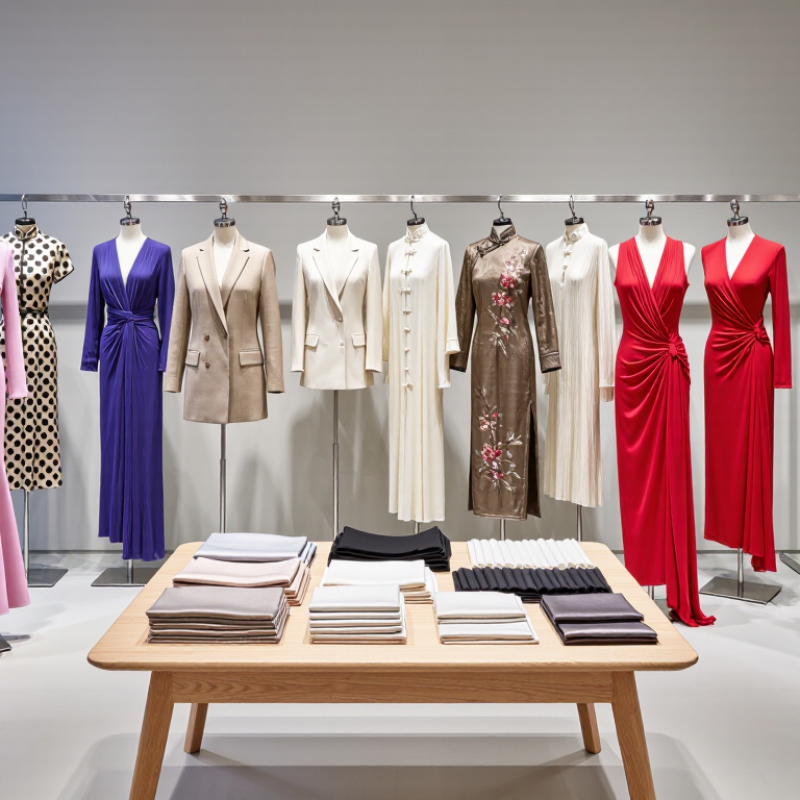
10 Best Ladies Dresses Wholesale Suppliers Worldwide

Global Apparel Market Scale: Statista’s US$1.79 Trillion 2024 Benchmark

Statista’s US$1.79 trillion estimate for the global apparel market in 2024 signals the scale of clothing demand worldwide. It provides useful context for buyers exploring ladies’ dress suppliers, but it does not measure the dress wholesale market alone. That distinction matters. A broad market figure cannot confirm a supplier’s quality, capacity, or delivery record.

For buyers, the benchmark is a starting point, not a sourcing shortcut. Compare fabric weight, stitching, size consistency, and sample garments before placing larger orders. Ask for clear minimum quantities and realistic production timelines. A dress may look polished in a catalogue, yet feel different under store lighting or after washing. Check the details.

Market estimates also have limits. Currency changes, reporting methods, and category definitions can affect comparisons between sources. The US$1.79 trillion figure describes an enormous sector, but it cannot predict demand for a specific cut, color, or price point. Buyers still need to test their own customer response. That takes time, and sometimes the first choice is wrong.

Supplier Selection Criteria: MOQ, Lead Time, Compliance, and Product Range

Selecting a ladies’ dress wholesale supplier starts with four practical checks: minimum order quantity (MOQ), lead time, compliance, and range. A low MOQ can help test a new style, but confirm whether it applies per design, color, or size. Small is safer. Ask for a written timeline covering samples, production, quality checks, and dispatch; add buffer time for seasonal launches. A quoted lead time without these stages is hard to compare.

Compliance needs evidence, not just reassuring language. Request current factory audit details, material specifications, and records showing how issues are corrected. The International Labour Organization reports that the garment industry employs more than 60 million people worldwide, making responsible sourcing a material part of supplier assessment. For product range, check whether one supplier can offer consistent grading, fabric options, and repeat colors. Textile Exchange’s Materials Market Report 2024 estimates global fiber production reached 124 million tonnes in 2023, highlighting the scale and complexity of textile sourcing. A broad catalog alone does not prove reliable stock or quality.

Tips: Request a sample in the actual bulk fabric, plus a size set and measurement sheet. Compare landed cost, not unit price alone. Ask how the supplier handles late fabric or failed inspection, and verify answers against documents. A polished sample can still mislead; I would treat it as a starting point, not a guarantee.

Ten Leading Ladies’ Dress Wholesalers Worldwide: Regions and Specialties

A useful worldwide shortlist is better understood by region and specialty than by a fixed ranking. China offers broad collections, from jersey day dresses to occasionwear, with many suppliers supporting mixed styles. India is known for cotton prints, embroidery, and flowing silhouettes. Bangladesh has strong cut-and-sew capacity for repeat orders and everyday dresses. Turkey often appeals to buyers seeking quick regional shipping and polished casual styles. Samples matter. Fabric weight can look different under store lighting.

Italy and Portugal serve buyers looking for refined construction, smaller runs, and elevated fabrics, though prices may be higher. The United Kingdom has wholesalers focused on boutique-ready collections and seasonal edits. In the United States, suppliers may offer domestic stock and faster replenishment, especially for common sizes. Brazil contributes vibrant prints and resort-inspired designs. Vietnam is a useful region to explore for carefully finished woven dresses and production partnerships. These are market tendencies, not guarantees for every supplier.

Before ordering, request a current size chart, fabric composition, sample photos, and clear lead times. Compare stitching at the seams and check whether lining shows through in daylight. Ask how colors may vary between batches. A low minimum order can be appealing, but it may limit size selection. I would not treat any regional label as proof of quality; supplier checks take time, and even a tidy sample can hide inconsistent bulk production.

Compare Supplier Fit Against McKinsey’s 2–4% 2024 Fashion Growth Outlook

McKinsey’s State of Fashion 2024 projected global fashion sales growth of 2–4%. Its executive survey also found that 73% expected consumer confidence to remain flat or worsen. That outlook favors wholesale suppliers who can support careful buying, not just large orders.

For a ladies’ dress supplier, compare minimum order quantities, repeat-order lead times, size consistency, and fabric availability. Ask for a sample in the exact fabric and color, then check seams, lining, and measurements. Small details matter. A low unit price can look attractive until slow replenishment leaves popular sizes unavailable. Request clear delivery estimates and sample records before committing; treat unverified claims cautiously.

Suppliers with flexible quantities may help retailers test prints, sleeve shapes, and seasonal colors without tying up too much cash. But flexibility alone is not proof of reliability. Compare quoted prices with freight, defect handling, and reorder terms, then track actual delivery performance. McKinsey’s growth range is a forecast, not a guarantee. I would still challenge the assumption that every supplier can respond quickly when demand shifts.

10 Best Ladies Dresses Wholesale Suppliers Worldwide — Compare Supplier Fit Against McKinsey’s 2–4% 2024 Fashion Growth Outlook

An anonymized comparison of established apparel-sourcing markets, not a ranking of named companies. Supplier fit is an editorial assessment of each market’s commonly used production strengths and sourcing considerations.

Rank Sourcing Market Common Dress-Sourcing Strength Potential Advantages Key Considerations Fit With a 2–4% Growth Outlook Best-Suited Buying Approach
1 China Broad capabilities across woven and knit dresses, fabric options, trims, and finished-garment production. Wide supplier ecosystem and options for coordinating multiple production inputs. Supplier capabilities, compliance, pricing, and lead times vary; verify each factory independently. High for diversified sourcing Compare several factories and request samples before placing larger orders.
2 India Cotton dresses, printed fabrics, embroidery, and other decorative or craft-led details. Useful for differentiated designs and a broad range of fabric and embellishment options. Confirm workmanship standards, color consistency, and production schedules with the supplier. High for product differentiation Use for collections where fabric, print, or embellishment helps distinguish the product.
3 Bangladesh Large-scale apparel production, including dress programs suited to repeatable specifications. Established export-oriented garment manufacturing base and potential for volume programs. Check factory capacity, product experience, compliance documentation, and order minimums. High for core-volume lines Prioritize clear specifications and stable repeat orders over frequent style changes.
4 Vietnam Export-oriented garment manufacturing, with options for structured and contemporary apparel. Can suit buyers seeking consistent production processes and diversified sourcing. Confirm the supplier’s specific dress expertise and fabric-sourcing arrangements. High for balanced sourcing Shortlist factories by garment type, quality requirements, and delivery window.
5 Türkiye Woven and knit apparel production with access to a regional textile and fabric base. May be useful for buyers serving European markets who value regional sourcing options. Compare landed cost, available capacity, and delivery terms against other regions. High for responsive regional supply Consider for seasonal programs where proximity to European distribution matters.
6 Portugal European apparel manufacturing, including dress production for quality-focused collections. Regional sourcing can simplify communication and logistics for some European buyers. Production capacity and minimums are supplier-specific; obtain quotations for the exact design. High for focused collections Evaluate for smaller, quality-led programs where regional coordination is valuable.
7 Italy Premium apparel manufacturing and fashion-oriented finishing for higher-specification dresses. Suitable for collections that place emphasis on design execution and finishing quality. Assess price point, order minimums, and production availability before committing. Selective for premium segments Reserve for products whose target retail positioning can support higher sourcing costs.
8 Pakistan Cotton and textile-linked apparel production, with potential for everyday dress programs. Textile expertise can be relevant when cotton fabrics are central to the product range. Validate fabric specifications, finishing, compliance, and delivery reliability at factory level. High for cotton-focused basics Request fabric and garment samples together to check performance from material to finished product.
9 Indonesia Export-oriented apparel production across a range of garment categories, including dresses. Provides another sourcing base for buyers seeking geographic diversification. Supplier specialization, material access, and minimum order quantities vary by factory. Moderate to high for diversification Use a qualification process that compares samples, capacity, and landed cost with existing sources.
10 Morocco Apparel sourcing option for buyers considering production close to European markets. Nearshore positioning may support regional supply strategies and closer buyer-supplier coordination. Confirm the factory’s dress-category experience, available capacity, and full delivery schedule. Moderate to high for nearshoring Evaluate for programs where regional proximity is more important than sourcing solely on unit price.

Outlook context: McKinsey’s 2024 fashion-industry outlook projected global fashion sales growth of 2–4% for 2024. The fit labels above are qualitative sourcing assessments, not McKinsey ratings or supplier performance data. Country-level descriptions are broad market characteristics; verify factory credentials, certifications, costs, minimum order quantities, and delivery commitments directly before purchasing.

Wholesale Due Diligence: Samples, Certifications, Pricing, and Shipping Terms

A supplier’s catalog can make every dress look ready for sale. A physical sample tells a more useful story. Check the seams, lining, zipper, and print placement under natural light. Measure the garment yourself and compare it with the size chart. One sample may not represent every production batch, so ask how quality checks are handled before shipment. Small differences matter.

Request copies of relevant certifications, then confirm which products and facilities they cover. A document without a clear scope is hard to assess. Ask for a written price breakdown covering fabric, labels, packaging, sample fees, and minimum order quantities. Compare the same specifications across suppliers; a low unit price may exclude important costs. I still find pricing easy to underestimate when alterations or size grading are involved. Leave room for that.

Shipping terms should state who arranges freight, when risk transfers, and which costs are included. Confirm production time separately from transit time, and ask how delays are communicated. Keep it written. Before placing a large order, consider a smaller trial run and inspect cartons on arrival. That adds time and expense, but it can reveal packing or sizing problems early. Even careful checks cannot remove every uncertainty.

Go to Top