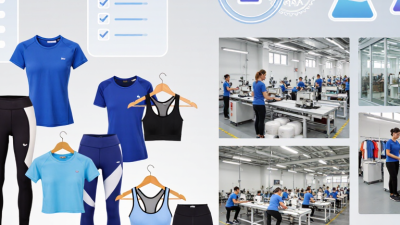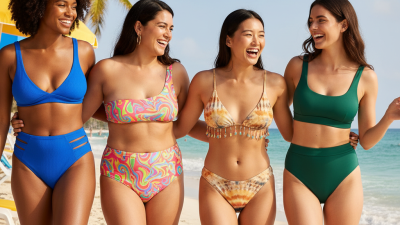

Choosing wholesale ladies gym wear can help a business build a consistent collection while managing stock costs and customer expectations. For boutique owners, online sellers, and fitness retailers, the right supplier matters as much as the designs. A soft, opaque legging with secure seams may earn repeat purchases; an attractive top that shifts during movement may not. Small details count.
Wholesale buying can offer broader size runs, coordinated colors, and more predictable replenishment than sourcing each style separately. It may also make pricing easier to plan. But lower unit costs do not guarantee better value. Fabric weight, stretch recovery, stitching, labeling, and size consistency deserve careful checks. Request samples, compare measurements, and test garments through realistic movement before committing to a large order. A quick visual check is not enough.
There are trade-offs. Minimum order quantities can tie up cash, and a popular color may sell more slowly than expected. Even experienced buyers misjudge demand sometimes. That is worth remembering. Reviewing sales by size and style can guide future orders, while clear supplier communication helps resolve quality concerns early. Reliable product details also let shoppers choose with greater confidence. This guide explores the practical business case for wholesale ladies gym wear, from assortment planning and supplier evaluation to quality checks and inventory decisions. The goal is not to promise easy profits, but to help businesses make informed choices and build a collection customers will genuinely want to wear.
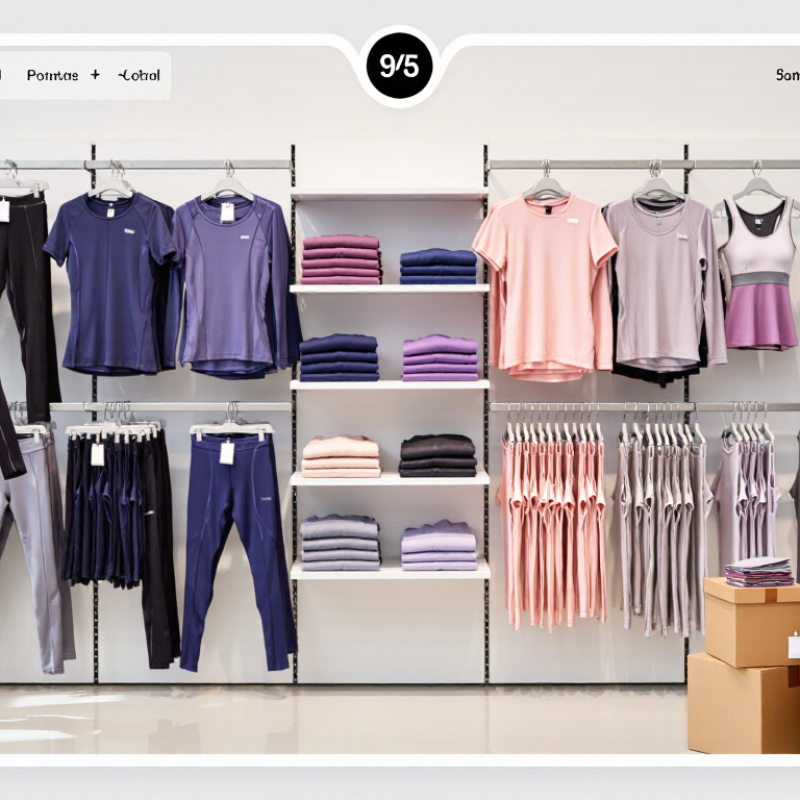
Wholesale ladies gym wear covers coordinated product ranges, not just leggings. A typical assortment may include sports bras, tanks, tees, shorts, joggers, and zip-front layers. Buyers also choose fabric weights, colors, size runs, and pack ratios. The details matter: a matte, squat-proof legging serves a different customer than a lightweight running short. Allied Market Research valued the global activewear market at $319.4 billion in 2022 and projected $771.8 billion by 2032. That forecast signals broad category demand, though it does not guarantee sales for every item.
Product specifications are part of the wholesale offer, too. Check fiber content, stretch and recovery, waistband construction, seam placement, and care instructions. Request samples and test them through movement, washing, and repeated wear. Fit matters. A bra may look supportive on a hanger but shift during a high-impact class. Ask suppliers for size charts and garment measurements, then compare them with your customers’ needs. A wide size range helps, but grading can still feel inconsistent between styles.
Some orders include private-label options, hangtags, folding, or custom packaging; others arrive ready for resale. Confirm minimum quantities, color availability, lead times, and defect policies before committing. Fabric claims deserve scrutiny. The Textile Exchange’s Materials Market Report tracks fiber production and sourcing, offering useful context when evaluating material choices. Still, a “recycled” label alone says little about comfort or durability. Touch the fabric, inspect the stitching, and leave room for a less-than-perfect sample.
Wholesale ladies gym wear can make daily operations more predictable when demand is steady. Buying coordinated styles in larger quantities may lower per-unit costs and simplify replenishment. It can also help a shop maintain a consistent range of sizes, colors, and fabrics. That matters when customers expect matching leggings and tops on the same rack. Before ordering, compare size ratios, fabric weight, stitching, and care instructions. Request samples and test them through washing and movement. Photos rarely show how seams feel during a squat. Cash flow still matters. A large order can tie up funds, and a guessed color may sit unsold for months. Forecast from recent sales, not optimism alone.
Tips: Start with a focused assortment. Track sales by size and color. Reorder proven basics, and buy trend-led pieces in smaller quantities. Check lead times and carton details before confirming quantities.
Clear purchasing routines can help staff receive stock faster. Use a simple sheet to track style, size, color, cost, and expected arrival date. Inspect cartons on delivery and record shortages promptly. Keep a small reserve for popular sizes, but review it after each season. Wholesale buying is not automatically efficient; inconsistent sizing or delayed shipments can disrupt a launch. Allow some flexibility in the plan.
Planning example: the figures below use an assumed order of 100 garments, an assumed wholesale cost of $12 per garment, and an assumed selling price of $30 per garment. They are illustrative calculations, not industry averages or supplier quotations. Freight, taxes, discounts, returns, and operating expenses are excluded unless stated.
| Business operation | How wholesale buying supports it | Useful measure | Illustrative calculation |
|---|---|---|---|
| Purchasing and budgeting | A planned bulk order helps the business estimate its stock spend before placing an order. | Order value before additional costs | 100 garments × $12 assumed unit cost = $1,200. |
| Range and size planning | A planned size and colour allocation makes the assortment easier to review and adjust to customer demand. | Units allocated by size, colour, and style | For example, 100 units across 5 sizes and 2 colours create 10 size-colour combinations. Actual quantities per combination can be set using sales history. |
| Stock cover | A larger planned quantity can provide stock for a defined selling period, subject to sales rate and product availability. | Units on hand ÷ average weekly sales | 100 units ÷ 25 units per week = 4 weeks of stock cover. |
| Reordering | Tracking sales and supplier lead time gives the business a practical basis for deciding when to reorder. | Reorder point = weekly sales × (lead time + buffer) | At 25 units per week, with an assumed 3-week lead time and 1-week buffer: 25 × (3 + 1) = 100 units. |
| Pricing and gross margin | Knowing unit cost helps the business assess a selling price and compare product-level gross margin before other expenses. | (Selling price − unit cost) ÷ selling price | At an assumed $30 selling price and $12 unit cost: ($30 − $12) ÷ $30 = 60% gross margin, before freight, taxes, and operating expenses. |
| Receiving and quality control | A consistent receiving process helps staff confirm quantities, sizes, colours, and visible condition against the purchase order. | Quantity variance and recorded defects | For a 100-unit order, compare the received count with 100 and record any shortage, wrong item, or visible defect for follow-up. |
| Inventory administration | Recording stock by style, size, and colour supports more accurate stock checks and sales reporting. | Number of active stock-keeping units (SKUs) | 2 styles × 5 sizes × 2 colours = 20 potential SKUs; not every combination needs to be ordered. |
Wholesale ladies’ gym wear can improve a retailer’s margins when order quantities match real demand. Buying coordinated leggings, sports bras, and training tops in bulk may lower the cost per item. That creates room for competitive prices without relying on constant discounting. Small gains add up.
A broader size run can also make a shop more useful to its customers. For example, keeping black leggings from extra-small to plus sizes beside moisture-wicking tops gives shoppers practical outfit choices. Fit still matters. Before placing a large order, check garment measurements, fabric stretch, seam strength, and care instructions. A low unit price means little if the waistband rolls or colors fade after washing.
Wholesale purchasing can simplify replenishment, too. Standardized styles make stock counts easier, while repeat orders help maintain a consistent assortment. However, bulk buying ties up cash and can leave slow-selling sizes on the shelf. That risk is real. Review sales by size and style, then test a modest quantity before expanding. Requesting samples and written product specifications helps compare fabrics and construction more reliably. Even careful forecasts miss sometimes; weather, local preferences, and changing workout trends can shift demand quickly.
When comparing wholesale ladies gym wear suppliers, test samples before judging catalog photos. Stretch leggings under bright light; check opacity, seam strain, waistband recovery, and fabric feel after washing. Small details matter.
Ask for test results on colorfastness, shrinkage, and moisture management, plus clear size charts for each style. Textile Exchange’s Materials Market Report 2024 estimates that global fiber production reached 124 million tonnes in 2023, with polyester making up 57%. That scale makes material claims worth checking: request fiber-content records and traceability details rather than relying on a “sustainable” label.
Compare minimum order quantities, sample costs, production timelines, and reorder capacity in writing. A low unit price can lose its appeal if inconsistent sizing creates returns or delayed restocks leave popular sizes missing.
Ask how the supplier handles defects, late shipments, and specification changes; request a sample from a repeat production run if possible. Check whether quoted prices include packaging and labeling. Not every supplier will excel at everything. I would rather accept a slightly longer lead time than gamble on leggings that turn sheer during movement, though forecasts can still be wrong. Start with a small order, record customer feedback, and revisit the size mix before scaling.
Why Choose Wholesale Ladies Gym Wear for Your Business?
How to Match Wholesale Stock to Customer Demand
Matching wholesale ladies gym wear to customer demand starts with sales evidence, not a guess about what looks popular. Review orders by size, color, and style each week, then compare them with returns and customer questions. Black leggings may sell steadily, while bright crop tops move faster during warmer months. Small tests help. Order core pieces in reliable quantities, and try trend-led designs in smaller batches.
Track sell-through over a consistent period, such as four weeks. Record stockouts separately: a sold-out size may signal strong demand, but it may also mean the initial order was too small. Check the size curve, fabric weight, and fit feedback before repeating an order. For example, repeated comments about a tight waistband are useful evidence, even when the style sells well. Demand shifts quickly.
Plan around supplier lead times and leave room for proven bestsellers, rather than filling every shelf with new designs. A simple spreadsheet can show which sizes need replenishment and which colors are lingering. Forecasts still miss. I would not treat last month’s sales as a guarantee, especially around seasonal changes. Recheck the figures often, and adjust the next order gradually.
How to Match Wholesale Stock to Customer Demand
This illustrative allocation shows how a retailer might distribute an initial 100-unit order across product types. Use your own sales and customer enquiries to adjust the mix; demand varies by season, location, and customer base.